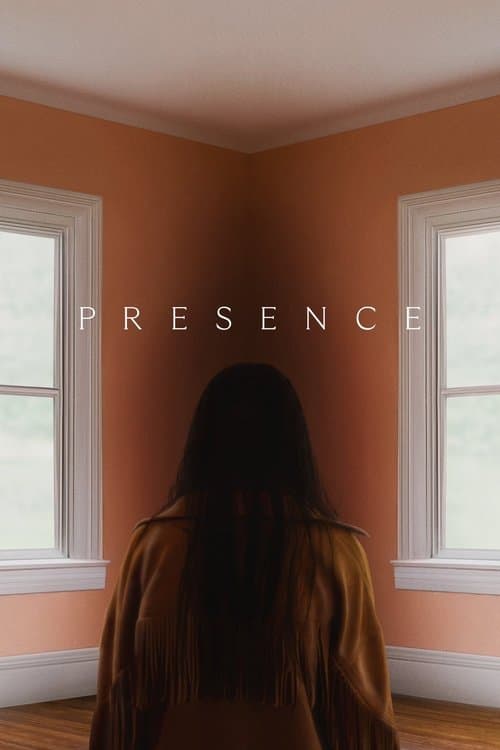
Presence (2025): Ending Explained
"In this house there is a presence."
A couple and their children move into a seemingly normal suburban home. When strange events occur, they begin to believe there is something else in the house with them. The presence is about to disrupt their lives in unimaginable ways.
9 min read
Release Year: 2025
Rating: 6.104/10
Runtime: 84 minutes
By Luna Sterling
Presence (2025): Ending Explained
As Luna Sterling, I've long been drawn to films that linger in the shadows of the human psyche, where the unseen pulses with a quiet menace. Steven Soderbergh's Presence (2025) is just such a beast—a slow-burn haunted house tale that twists the supernatural into a visceral knot of family fractures and unspoken horrors. Shot with an eerie, second-person perspective that makes you feel like the ghost in the room, the film builds an atmosphere thick with creaking floorboards and half-heard whispers. But it's the ending that truly haunts, unraveling the threads of protection, loss, and redemption in ways that leave you breathless. If you're searching for a breakdown of what goes down in those final, gut-wrenching moments—and what they really mean—let's dive into the fog.
Quick Recap
The Payne family—Rebekah, Chris, and their teens Tyler and Chloe—settle into a sprawling suburban home that hums with an unnatural stillness, the kind that presses against your eardrums like distant thunder. From the outset, an unseen Presence shadows their every move, its ethereal footsteps echoing through empty hallways and its invisible gaze lingering on the vulnerable. Rebekah, burdened by her white-collar crimes, favors the athletic Tyler while sidelining the grieving Chloe, whose world shattered after her friend Nadia's suspicious death. Tensions simmer: Chris worries about the family's unraveling, Tyler dabbles in cruelty and drugs with his new friend Ryan, and Chloe senses the Presence as a comforting echo of Nadia, a spectral shield amid her isolation.
As renovations stir the house's dusty corners and strange occurrences mount—from slamming doors to overturned shelves—the family fractures further. Chloe confides in Ryan, sharing her raw grief over Nadia's overdose, only for their budding connection to curdle under his predatory influence. A psychic medium, Lisa, visits and senses the Presence's benevolent confusion, trapped in a non-linear swirl of time, desperately trying to avert a looming tragedy. Rebekah and Chris reconcile amid whispers of divorce, leaving the kids alone as the air grows heavier, laced with the metallic tang of impending doom. Tyler's casual manipulations and Ryan's hidden darkness bubble to the surface, setting the stage for a confrontation that blurs the line between the living and the lost.
What Happens in the Ending
The film's climax unfolds in a suffocating haze of betrayal and desperation, the house's walls seeming to close in like a held breath. With Rebekah and Chris away on a business trip, Tyler lounges in the living room, the low thrum of music masking the Presence's hesitant approach. It brushes close, a chill draft stirring the curtains, but Tyler, dulled by the evening's haze, barely registers it before Ryan arrives. Ryan, his eyes gleaming with a predatory glint under the dim lamplight, spikes Tyler's drink with drugs from his pharmacist father's stash, leaving the boy slumped unconscious on the floor like a discarded puppet.
Upstairs, Ryan corners Chloe in her room, the air thick with the scent of her fear-sweat and the faint, acrid bite of spilled liquor. She resists his advances, but he pressures her into downing another laced drink, her protests dissolving into a foggy stupor. As she slumps against the bed, Ryan's face twists into something feral; he reveals his monstrous secret, wrapping plastic around her face with methodical cruelty. He confesses to murdering Nadia—and another girl—staging them as overdoses, his voice a low rasp that cuts through the muffled thuds of her struggle. The Presence hovers, frantic, its energy manifesting in flickering lights and rattling doorknobs, but it's powerless to intervene directly, the room's shadows deepening with its impotent rage.
Desperation propels the Presence downstairs, where it nudges Tyler's limp form, the floorboards groaning under an unseen weight. It persists, a spectral urgency building like a storm—tipping a lamp, scattering papers—until Tyler stirs, his eyes fluttering open in groggy confusion. He stumbles upstairs just in time, bursting into Chloe's room to tackle Ryan. The two grapple in a blur of flailing limbs and shattering glass, crashing through the bedroom window in a cascade of splintered shards and night air. They plummet to the ground below, their bodies crumpling in the moonlit yard with a sickening finality, the impact echoing like a door slamming shut forever.
In the aftermath, time slips forward in a pall of grief, the house now a hollow shell echoing with absence. The Paynes prepare to move out, boxes stacked like tombstones in the dim living room. Rebekah pauses, a shiver tracing her spine as she senses the Presence one last time—its cool whisper grazing her skin like fog off a grave. Drawn to an antique mirror, its surface warped and dusty, she peers in and gasps: Tyler's reflection stares back, not as a ghost, but as a vivid echo of the boy who returned to save his sister. She collapses in sobs, the realization crashing over her like icy water, as Chris and Chloe gather around, their faces etched with shared sorrow. The Presence, its purpose fulfilled, drifts away, ascending into the starless sky—a faint shimmer dissolving into the vast, indifferent night.
The Meaning Behind the Ending
At its core, the ending of Presence peels back the veil on themes of sacrificial love and the fragile threads binding family, using the supernatural as a mirror (quite literally) to reflect human flaws and redemptions. The Presence isn't just a poltergeist; it's a temporal guardian, woven from the fabric of non-linear time as Lisa hinted, embodying the idea that love—or regret—can ripple backward to alter fate. Tyler's heroic intervention, revealed through the mirror's haunting gaze, symbolizes a profound reversal: the favored son, once a source of division, becomes the family's unseen protector, his death a visceral price for atonement. The plastic wrap suffocation evokes the suffocating weight of secrets and neglect, while the window crash shatters the illusion of suburban safety, letting in the raw, howling wind of truth.
Psychologically, the ending delves into grief's distorting lens—Chloe's initial belief that the Presence is Nadia underscores how loss warps perception, only for the mirror to redirect that mourning toward Tyler's sacrifice. It's a gut-punch metaphor for parental blindness: Rebekah's breakdown isn't just sorrow; it's the dawning horror of her favoritism's cost, the Presence forcing her to confront the boy she overlooked. The ascension into the sky feels like a release, a spectral exhale after the tension's stranglehold, suggesting that even in tragedy, there's a quiet transcendence—protection beyond the grave, where the house's oppressive atmosphere finally lifts, leaving behind the metallic aftertaste of blood and glass.
Character Arcs and Resolution
The ending ties the Paynes' arcs into a knot of hard-won unity, each thread pulled taut by loss. Chloe, the emotional core whose vulnerability drew the Presence like a moth to flame, emerges scarred but affirmed—her grief over Nadia validated not by vengeance, but by survival, her arc shifting from isolated fragility to a tentative resilience as her family rallies. Tyler's journey, from entitled manipulator to unwitting savior, culminates in a redemptive blaze; his death isn't glorified but raw, a psychological reckoning that exposes the hollowness of his earlier cruelties, leaving his spirit as the family's quiet redeemer.
Rebekah's arc fractures and mends in the mirror's reflection—her criminal detachment and favoritism exposed as the true hauntings of the home, her sobs marking a pivot toward empathy, shielding Chloe from further isolation. Chris, the steady anchor, finds resolution in action: his earlier support for Chloe blossoms into collective healing, his reconciliation with Rebekah solidified not in words, but in shared vigil. Together, their arcs resolve the film's familial tensions, the move-out a literal and figurative exodus from dysfunction, though the psychological scars linger like faint creaks in an empty house.
Alternate Interpretations
Presence's ending thrives on ambiguity, inviting viewers to question the Presence's true nature amid its ethereal vagueness. One reading casts it as Tyler's future self, displaced through time to prevent his own regret-fueled absence—his reflection in the mirror a loop of self-sacrifice, explaining the waning influence as his "timeline" catches up post-rescue. This aligns with Lisa's non-linear warning, turning the film into a psychological puzzle of predestination, where Tyler's heroism rewrites his arc retroactively.
Alternatively, the Presence could be Nadia, Chloe's lost friend manifesting as a benevolent force, her interventions (spilling drinks, shielding doors) rooted in unfinished justice against Ryan. The mirror twist then becomes a misdirection, blending spirits in grief's haze—Rebekah sees Tyler because the Presence channels collective family loss, not pinpointing one soul. A more skeptical take? It's no individual ghost but the house's accumulated trauma, a metaphorical embodiment of suppressed family pain that "ascends" once the truth erupts, subverting supernatural tropes for a grounded allegory of emotional catharsis. These layers keep the tension alive, the sky's shimmer an open-ended exhale.
Themes and Symbolism
The ending reinforces Presence's core themes of hidden dangers in domestic bliss and the redemptive power of belated insight, subverting the haunted house genre by making the "monster" a familial blind spot rather than external evil. Symbolism drips like condensation on a cold window: the antique mirror as a portal to truth, its warped glass distorting yet clarifying the past; the plastic wrap a visceral stand-in for smothering neglect and predatory control; the window crash a literal breaking point, shattering illusions of control and letting in the night's unforgiving clarity.
Broader motifs of time's fluidity—echoed in the Presence's confused wanderings—underscore how trauma loops eternally until confronted, while the ascension subverts ghostly permanence, suggesting healing through acknowledgment. Sensory undercurrents amplify this: the house's musty silence gives way to chaotic crashes, mirroring psychological upheaval, and the final skyward drift evokes a subtle liberation, tension uncoiling into ethereal peace.
Final Thoughts
Presence lands its ending with the precision of a held breath finally released, blending visceral horror with psychological depth to create a finale that's as unsettling as it is poignant. It works because it doesn't spoon-feed closure—Tyler's mirrored gaze lingers like a half-remembered dream, forcing us to grapple with the ambiguities long after the credits. For audiences craving that immersive chill, it's a masterclass in atmospheric tension, turning a simple suburban specter into a mirror for our own buried regrets. If the film's slow simmer left you pondering, this conclusion rewards with emotional resonance, proving that sometimes, the greatest haunts are the ones we inflict on each other. Highly recommended for a rewatch under dim lights—feel that draft? It's just the Presence, saying goodbye.