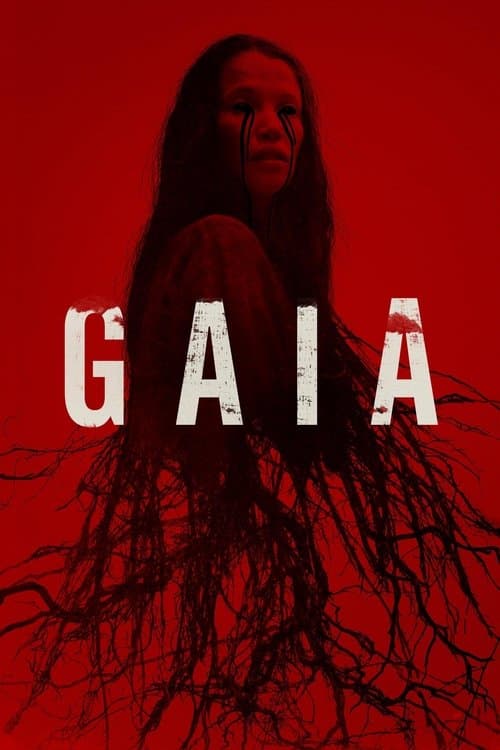
Gaia (2021): Ending Explained
Gaia ends by completing the fungus's invasion: the human who tried to escape becomes its host, and the spore spreads to civilization itself
7 min read
Release Year: 2021
Rating: 5.9/10
Runtime: 97 minutes
By Luna Sterling
The short answer
The short answer
Gabi dies as the organism's host, and the fungus reaches the city. She begs Stefan to kill her, her body now covered with it, and the film implies he does. Stefan carries her corpse back to the house, walks out of the Tsitsikamma forest alone, sits down to a meal in a restaurant, and leaves. The leftovers on his plate bloom with fungus before the credits roll. The invasion Barend spent thirteen years feeding with mushrooms and blood doesn't end in the forest. It hitches a ride on the one person who got out. Stefan is the vector, and he doesn't know it yet.
The last twenty minutes
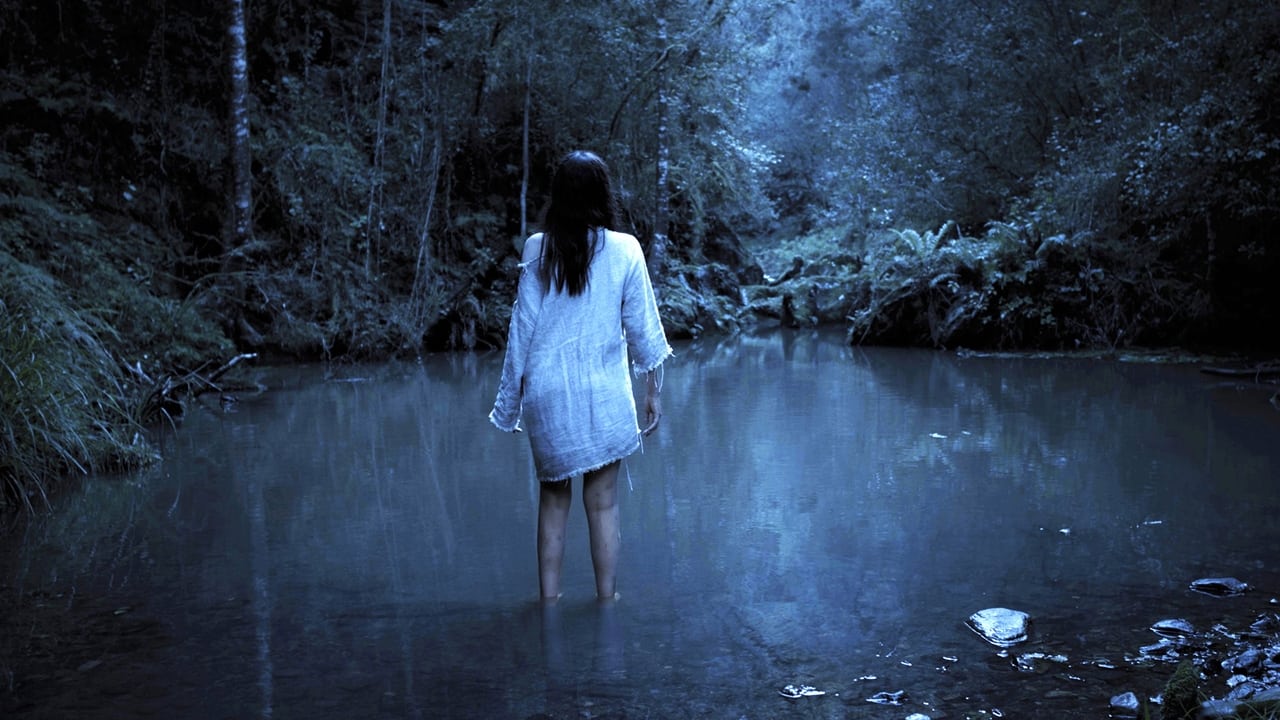
Gabi turns back and Stefan spikes his father
Gabi has already started walking toward the city when she changes her mind and returns to the house, reaching it in time to stop Barend from sacrificing Stefan to the organism. During the struggle, Stefan stabs Barend in the spine. A boy who spent his whole life eating mushrooms from the offering tree and obeying his father has just paralyzed him. The cost is the last family he has.
Barend offers himself
Later, Barend is shown with the fungus growing out of his back, offering his own blood to the organism. He wanted to feed it Stefan. He ends up feeding it himself. The sacrifice he planned gets redirected onto the sacrificer, and he seems to accept it, which is the most unsettling part.
Gabi infects and asks for the arrow
Some time later, the infection takes Gabi fully. Her body becomes covered with the fungus. She begs Stefan to kill her. This is the exact request Winston made of her at the end of his arrow, and she refused it then, pulling Barend off the shot. Now she has to make it of someone else, and Stefan has to answer it. The cost is everything Gabi was trying to get back to.
Stefan leaves the body in the house
It is implied that Stefan kills Gabi. He leaves her body inside the wooden house, the same building where Barend and Lily honeymooned and where Stefan was conceived, and where Barend kept his writings comparing humans to monkeys in captivity. The house becomes a tomb for two generations. Stefan walks out of it for the first time without his father.
The restaurant
Stefan reaches the city and eats a meal in a restaurant. He's the only survivor of the whole ordeal. A kid raised in the woods, eating rice and sitting among strangers. Then he leaves.
The leftovers
The food he leaves behind is quickly covered with fungus. That's the last beat, and it's a quiet catastrophe. The organism doesn't need a monster to spread. It needs a plate, a fork, a waiter, the next person who clears the table.
The ledger
What they gain
Gabi: Reaches the city's edge alive long enough to beg for death on her own terms, rather than dying from the organism creeping at its own pace. She gets to choose. That's it.
What they pay
Gabi: Everything. Her foot, her drone, her job, her body. She ends up exactly like Winston, covered and begging, and the mercy she gave him she has to ask of a teenager she barely knows.
What they gain
Stefan: Walks out of the forest, away from his father, into a restaurant with actual food. Survives the film.
What they pay
Stefan: His father's spine on his own blade, his mother's tree left behind, Gabi's body in the house he grew up in, and a spore load he carries into a crowded city without knowing.
What they gain
Barend: Gets his apocalypse. The organism spreads. He claims he met God in the forest and the god is finally moving outward.
What they pay
Barend: His legs, his son, his blood. He wanted to feed Stefan to the offering tree; he ends up pinned to it himself, and the organism takes his son's loyalty anyway.
What they gain
Winston: A death on his own terms, an arrow he drove into himself before Barend could fire.
What they pay
Winston: His body, his last hours, the mercy he had to beg for from a colleague because she wouldn't let Barend do it.
The irony

Barend wanted the world infected and he got it. He just isn't the one who spreads it. He spends the film feeding the organism, harvesting mushrooms, dragging his son into the ritual, ranting that humanity is doomed. Then his own son puts a blade in his spine, and the fungus grows from his back anyway, and he dies offering his blood to a tree in the woods where nobody will see it. The organism gets what Barend promised it: a way out. But the exit route isn't Barend. It's Stefan, the boy Barend tried to sacrifice, the boy who takes the fungus into a restaurant and leaves it on a plate.
That's the bill. Barend pays with his body and gets nothing for it. Stefan pays with his father, his only home, and the last person who ever touched him gently, and he doesn't even know there's a charge on the card. He just eats lunch. The organism got its priest, its sacrifice, and its vector, and only one of those three knew what he was volunteering for.
Did anyone get a warning
The warning was in Barend's own handwriting, and Gabi read it. Barend kept writings in the house that compare humanity to monkeys in captivity, and Gabi found them the day she also saw him feed mushrooms from the offering tree to Stefan. That's the forecast: humans aren't the audience of this story, they're the enclosure. The organism is the keeper, patient and enormous, and every character in the film is either something it's cultivating or something it's about to harvest. Barend knew that. He wrote it down. He still thought he could negotiate.
"She was here long before the apes started dreaming of gods."
Read that line again with the ending in view. It isn't a boast about the organism. It's a hierarchy. Apes dreamed of gods; the fungus was already here, silently being one. And Barend, who said it, dies with fungus growing from his spine, blood leaking into the roots of the thing he worshipped. He didn't get to be its prophet. He got to be its input.
The verdict
The verdict
The film pays its bill in full and makes Stefan the unwitting courier. Jaco Bouwer and Tertius Kapp don't let Gabi be the escape hatch. She doesn't make it home, she doesn't get to warn anyone, and the one mercy she manages is her own death. The organism doesn't need a monster to finish the job either. It needs a survivor with spores on his clothes and a plate of food left on a table, and that's exactly what the last shot hands you. The price is unfair on purpose. Stefan did nothing to deserve the forest, the father, or the infection he's carrying, and the film's final image says the same thing about the restaurant, the city, and everyone in it. Gaia isn't ambiguous about who pays. It's ambiguous about who notices, and by the time they do, the invoice will be on the table already.