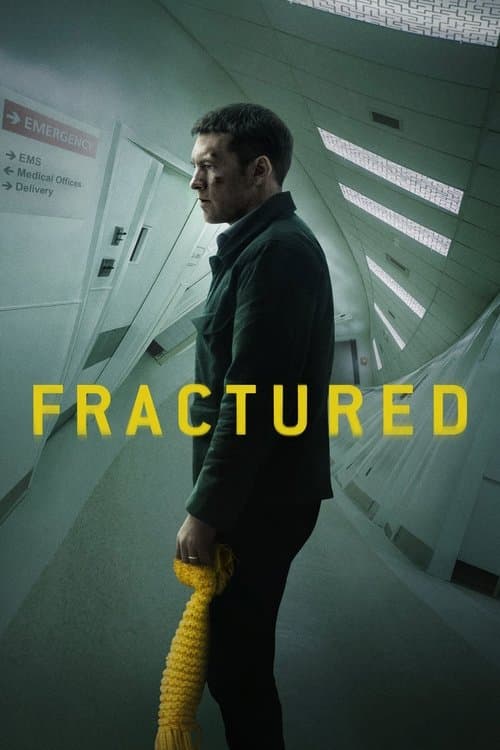
Fractured (2019): Ending Explained
"Finding his family means facing the truth."
Driving cross-country, Ray and his wife and daughter stop at a highway rest area where his daughter falls and breaks her arm. After a frantic rush to the hospital and a clash with the check-in nurse, Ray is finally able to get her to a doctor. While the wife and daughter go downstairs for an MRI, Ray, exhausted, passes out in a chair in the lobby. Upon waking up, they have no record or knowledge of Ray's family ever being checked in.
9 min read
Release Year: 2019
Rating: 6.749/10
Runtime: 101 minutes
By Ellis Carver
Fractured (2019): Ending Explained
By Luna Sterling
In the shadowy underbelly of Brad Anderson's 2019 thriller Fractured, the line between reality and delusion blurs like fog creeping over a rain-slicked highway. Starring Sam Worthington as the unraveling everyman Ray Monroe, this film pulses with a claustrophobic tension that seeps into your bones, turning a simple family road trip into a descent into psychological horror. As a critic who's dissected countless tales of fractured minds, I find Fractured particularly gripping for its visceral grip on grief's distorting lens. If you're here scouring for a Fractured ending explained, buckle up—we're peeling back the layers of this mind-bending finale, from its literal shocks to the haunting metaphors that linger like a half-remembered nightmare.
Quick Recap
Ray Monroe, a grieving architect still haunted by the drowning death of his son a year earlier, embarks on a tense cross-country drive home with his wife Joanne and young daughter Peri after a strained Thanksgiving visit to her parents. The air in the car crackles with unspoken resentments—Ray and Joanne's marriage is fraying at the edges, their arguments slicing through the mundane rhythm of the journey like shards of glass. Desperate for a bathroom break, they pull into a desolate gas station rest area, the kind of forgotten spot where wind whispers through chain-link fences and the ground feels unnaturally soft underfoot.
Chaos erupts in an instant: Peri, rummaging for her lost compact mirror, wanders too close to a stray dog snarling in the shadows. Ray, in a panicked bid to protect her, hurls a rock that startles the animal—but it also sends Peri tumbling backward into an exposed construction pit, her cries echoing like a fracture in the earth itself. Ray dives after her, slamming his head against the jagged edge in the dim twilight. When he stirs, disoriented and tasting blood, Joanne is there, her face pale and frantic as they assess Peri's mangled arm. Ignoring the mounting dread, Ray insists on rushing to a nearby hospital, the family's fragile bonds now tested by injury and his growing haze of concussion.
At the sterile glow of the hospital, the nightmare truly begins. Amid bureaucratic indifference—a nurse's cold dismissal, questions about organ donation that hang like ominous portents—Peri is whisked away for scans, Joanne at her side. Ray, exhaustion pulling at him like invisible weights, collapses into a lobby chair. The world fades to black, and when he awakens, the fluorescent lights buzz with a new menace: the staff insists he arrived alone, treated only for a head wound. No records of Joanne or Peri exist. Panic rises like bile as Ray's pleas turn to shouts, the hospital's corridors stretching into an endless, echoing labyrinth of denial.
What Happens in the Ending
The finale of Fractured unfolds in a frenzy of violence and revelation, the camera's shaky gaze capturing every sweat-slicked struggle and echoing gunshot in the hospital's bowels. Ray, now a man possessed by desperation, escapes his sedated confinement in a psych ward-like room, the metallic tang of fear sharp in the air. He flags down two police officers outside, his voice raw and pleading as he recounts the horror. They agree to investigate, but the hospital yields no trace—security footage shows Ray arriving solo, and the gas station pit reveals only a vast bloodstain, no bodies, no mirror. The officers turn on him, suspecting foul play, their radios crackling with accusations.
In a visceral surge of adrenaline, Ray wrests a gun from one officer and locks them inside the gas station, the door slamming like a coffin lid. He races back to the hospital, the night air whipping against the car windows as sirens wail in the distance. Bursting into the basement scanning facility, he confronts a nightmarish scene: Peri strapped to an operating table, surgeons in bloodied scrubs poised to harvest her organs, the hum of machines underscoring the cold precision of the blade. Joanne lies drugged nearby, her eyes glassy and vacant. Ray fights through security guards in a brutal melee—fists thudding against flesh, bodies crumpling to the linoleum floor slick with exertion.
He drags Peri and Joanne from the theater, firing a shot that drops a doctor in a spray of red, the acrid smell of gunpowder mingling with antiseptic. They flee to the car, tires screeching as Ray peels out into the dawn-lit highway, breaths ragged and triumphant. But as the camera lingers on the rearview mirror, the truth fractures open: the back seat holds not just his family, but their lifeless forms—Peri broken from the fall, Joanne impaled on a spike in the pit, her blood long dried. The "rescued" Peri and Joanne were phantoms of his mind, and the unconscious figure beside them is a gravely ill patient Ray unwittingly kidnapped during his rampage. The hospital's horrors? A delusion woven from guilt and trauma, the engine's rumble now carrying him toward an inescapable abyss.
The Meaning Behind the Ending
At its core, the ending of Fractured is a gut-wrenching metaphor for the psyche's desperate armor against unbearable loss, where denial doesn't just cloud judgment—it reconstructs reality into a grotesque alternate world. Ray's hallucinated hospital odyssey symbolizes the mind's fractured architecture: the sterile corridors represent the cold, unyielding face of grief, while the organ-harvesting plot twists into a visceral emblem of exploitation and sacrifice. Peri, the innocent child on the brink of being "dismantled" for parts, mirrors Ray's subconscious fear that his family's wholeness is being vivisected by his own failures—his rock-throw a literal catalyst for destruction, much like his unresolved anger toward Joanne.
Thematically, this reveal underscores the film's exploration of psychological splintering, where tension builds not from external monsters but from the internal storm of guilt. The pit, that yawning maw of earth, becomes a symbol of the emotional chasm Ray has dug in his marriage, swallowing his loved ones whole. As he drives away with corpses in tow, the ending evokes the suffocating weight of truth's intrusion, a moment where the fog of delusion lifts just enough to expose the rot beneath. It's a haunting commentary on how trauma doesn't heal—it metastasizes, turning protector into perpetrator in the dim light of self-deception.
Character Arcs and Resolution
Ray's arc is the film's throbbing heart, a descent from flawed father to tragic architect of his own ruin. Haunted by his son's drowning—a loss that already cracked his foundation—the pit incident shatters him further, his concussion fueling a denial so profound it recasts him as a hero in a fabricated siege. By the end, as reality crashes in during that final drive, Ray doesn't achieve redemption; instead, his "resolution" is a hollow victory, driving into uncertainty with stolen lives in his wake. It's a visceral portrayal of a man whose protective instincts curdle into violence, leaving him isolated in the wreckage of his illusions.
Joanne and Peri, though central, serve as spectral mirrors to Ray's turmoil. Joanne's arc peaks in her imagined pleas for reason, highlighting the marriage's fractures, while Peri's innocence amplifies the stakes—her "death" a direct consequence of Ray's impulsive rage. Their true fates seal the family's dissolution, resolving nothing but underscoring Ray's isolation: he's not just lost them; he's complicit in their erasure, forever trapped in the rearview's accusing glare.
Alternate Interpretations
While Fractured's twist is presented as a clear-cut hallucination born of trauma, its ambiguities invite darker readings that blur the line between mind and malice. One interpretation posits that elements of the hospital were real—perhaps Ray did arrive alone, his head wound severe enough to conjure the rest, but the organ-harvesting scheme hints at a shadowy conspiracy he half-perceives. The kidnapped patient could be a literal act of misguided heroism, suggesting Ray's delusions partially grounded in a fractured reality where the hospital's indifference feels like outright predation.
Another lens views the entire narrative through survivor's guilt: maybe the pit fall killed only Peri, and Joanne's "push" is Ray's repressed memory of an accident during the rescue, amplified by his concussion. This ambiguity heightens the psychological fog, leaving viewers to question if Ray's escape is triumphant delusion or the prelude to his arrest, the highway stretching into endless, unresolved torment.
Themes and Symbolism
The ending reinforces Fractured's core themes of grief's corrosive power and the illusion of control, subverting the home-invasion thriller trope by inverting it inward—the true intruder is Ray's unraveling psyche. Symbolism abounds in the sensory details: the pit's earthy, blood-soaked depths evoke buried traumas resurfacing, while the hospital's buzzing lights and echoing halls symbolize institutional dehumanization, a metaphor for how society "dissects" the vulnerable. The compact mirror Peri seeks becomes a poignant emblem of fractured self-perception, reflecting Ray's distorted view of his family.
Broader still, the film probes mental health's invisibility, challenging viewers to confront how denial can manifest as monstrous action. It subverts expectations of paternal heroism, revealing protection as a double-edged blade that wounds deepest from within, all wrapped in an atmosphere of creeping dread that clings like damp fog.
Final Thoughts
Fractured's ending is a masterstroke of psychological unease, delivering a twist that doesn't just shock but burrows into the subconscious, forcing us to relive Ray's denial alongside him. It works brilliantly because it trades jump scares for simmering tension, the reveal hitting like a cold wave that recontextualizes every prior moment. For audiences craving a Fractured ending explained, it's a reminder of cinema's power to make the familiar terrifying—the family car, once a sanctuary, now a hearse on wheels. If Anderson's film falters anywhere, it's in its brisk pacing, which occasionally mutes the emotional depth, but this finale cements it as a taut, evocative thriller. Watch it alone at night; the silence afterward will feel heavier than before.