Fall (2022): Ending Explained
"Fear reaches new heights."
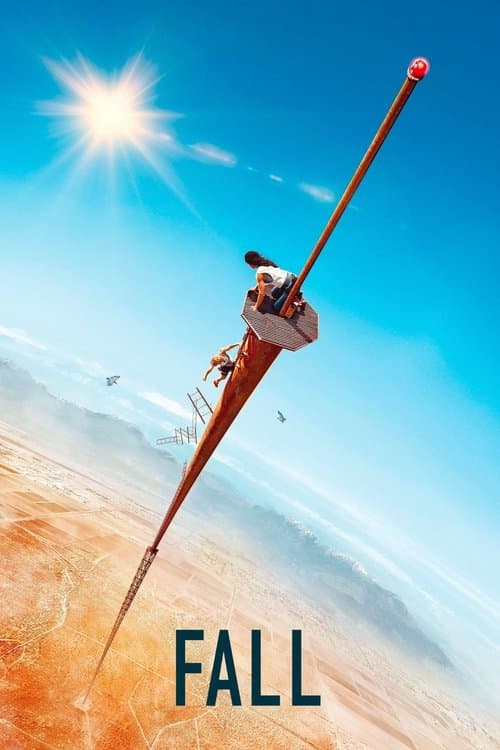
For best friends Becky and Hunter, life is all about conquering fears and pushing limits. But after they climb 2,000 feet to the top of a remote, abandoned radio tower, they find themselves stranded with no way down. Now Becky and Hunter’s expert climbing skills will be put to the ultimate test as they desperately fight to survive the elements, a lack of supplies, and vertigo-inducing heights
9 min read
Release Year: 2022
Rating: 7.12/10
Runtime: 107 minutes
By Luna Sterling
Fall (2022): Ending Explained
By Luna Sterling
The 2022 survival thriller Fall grips you from the start, plunging viewers into a vertigo-inducing nightmare of isolation and desperation. Directed by Scott Mann, this film masterfully blends heart-pounding action with raw psychological horror, all set against the vast, unforgiving desert expanse. As best friends Becky and Hunter scale a derelict 2,000-foot radio tower to confront grief head-on, the story unravels into a tense battle against the elements, betrayal, and the mind's fragile edges. But it's the film's shattering ending that lingers like a shadow in the wind—twisted, visceral, and profoundly unsettling. If you're searching for a Fall ending explained, this breakdown dives deep into the literal events, symbolic layers, and thematic resonances, revealing how it all culminates in a gut-wrenching twist.
Quick Recap
Fall opens with a tragic accident: Becky, her husband Dan, and her thrill-seeking best friend Hunter are mountain climbing when Dan plummets to his death, leaving Becky shattered. A year later, Becky has retreated into isolation, haunted by grief and contemplating suicide. She's estranged from her father, who urges her to move on, but the weight of loss clings to her like desert dust. Enter Hunter, ever the adrenaline junkie, who convinces a reluctant Becky to climb the abandoned B-67 TV Tower in the remote desert—a rusted behemoth slated for demolition. The plan? Scatter Dan's ashes from the summit as a cathartic ritual to help Becky heal and reclaim her life.
What begins as an empowering ascent quickly spirals into terror. The duo reaches the precarious platform at the top, where Hunter films their daring exploits for her YouTube channel, goading Becky into a free-hang that tests her limits. Becky scatters the ashes, a moment thick with emotional release, but as they descend, the corroded ladder snaps. Becky tumbles, saved only by the rope linking her to Hunter, but they're now stranded 2,000 feet up, with their backpack—containing vital water and a drone—tumbling onto a communications dish far below. Becky's thigh is gashed open, the metallic tang of blood mixing with the dry, scorching air.
As days blur in the relentless sun, dehydration sets in, sharpening the psychological strain. Hunter's attempts to summon help fail spectacularly: cell signals are jammed by the tower's interference, a dropped phone shatters, a flare attracts thieves who steal their car, and a drone carrying a plea smashes into a truck. Tensions peak when Becky spots a tattoo on Hunter's ankle—"1-4-3," Dan's code for "I love you"—unveiling Hunter's secret four-month affair with Dan before their wedding. Betrayal cuts deeper than the fall, fueling rage amid their dwindling hope. Hunter risks everything to retrieve the backpack, but the climb leaves her bloodied and the platform echoing with unspoken fractures. By now, the vultures circle, their shadows a harbinger of the inevitable, as Becky's grip on reality frays under the merciless heat.
What Happens in the Ending
The final act of Fall unfolds with a suffocating intimacy, the tower's skeletal frame creaking like labored breaths in the stifling night. Delirium from dehydration has Becky in its throes—her vision swims, the metallic bite of thirst coating her tongue, hallucinations blurring the line between companion and ghost. In a fleeting moment of clarity, the truth crashes down: Hunter didn't survive the backpack retrieval. She slipped and fell onto the communications dish below, her body broken and still amid the dish's cold, curved metal. Everything since—the conversations, the shared desperation—has been a spectral echo in Becky's fractured mind, a desperate illusion to stave off total solitude.
Dawn breaks with a grotesque awakening. A vulture, its beak sharp as regret, descends on Becky's wounded thigh, tearing at the festering gash with wet, ripping sounds that echo her inner turmoil. In a primal surge of survival instinct, Becky fights back, bludgeoning the bird to death in a frenzy of feathers and blood. The act is raw, visceral—her hands slick with gore as she rips into the carcass, the warm, gamey flesh a grim sustenance that revives her just enough to act. Strength flickering back like a dying ember, Becky abseils down the rope to the dish, the wind whipping her face, vertigo clawing at her senses.
There, Hunter's corpse lies twisted and exposed, a silent accusation under the blazing sun. Becky, tears carving paths through the grime on her cheeks, retrieves a second phone from her pocket. She types a final message to her father, a raw plea for rescue, then slips it into Hunter's shoe. With a heave born of exhaustion and resolve, she shoves the shoe into Hunter's lifeless body and hurls it off the tower. The form plummets, a dark silhouette against the endless sky, cushioning the phone's fall just enough for the signal to break free and transmit. Her father receives the message, alerting emergency services in a frantic blur. Helicopters roar in, their rotors slicing the air like salvation, and Becky is winched to safety—reunited with her father in a tear-streaked embrace, the tower receding into the haze like a vanquished demon.
The Meaning Behind the Ending
At its core, the ending of Fall is a brutal meditation on grief's isolating grip, where the physical fall mirrors an emotional plummet into the abyss. The revelation of Hunter's death and Becky's hallucinations isn't just a plot twist—it's a psychological unraveling, symbolizing how loss can manifest as denial, conjuring the lost to fill the void. Hunter's body, desecrated yet instrumental in Becky's salvation, embodies forgiveness amid betrayal: by using it to send the message, Becky transforms her friend's corpse from a symbol of deceit into one of redemption, the "1-4-3" tattoo now a bridge rather than a barrier.
The vulture scene amplifies this with visceral symbolism—the bird, a scavenger of the dead, represents the decay of Becky's old self, the grief that's been gnawing at her since Dan's death. Eating from it is an act of rebirth, ingesting death to fuel life, underscoring the film's theme that survival demands confronting the grotesque. The tower itself looms as a metaphor for unresolved trauma: its rusted heights force Becky to scatter ashes (Dan's) and, implicitly, bury secrets (Hunter's), descending not just physically but spiritually renewed. The ending whispers that healing isn't linear—it's a bloody, solitary climb back from the edge.
Character Arcs and Resolution
Becky's arc is the film's throbbing heart, evolving from a grief-stricken recluse—paralyzed by Dan's death, her world narrowed to suicidal shadows—to a fierce survivor who stares down her demons. The climb starts as Hunter's push for catharsis, but the stranding strips away illusions, forcing Becky to process betrayal and isolation alone. By killing the vulture and using Hunter's body, she reclaims agency, her reunion with her father sealing a mended bond fractured by her withdrawal. It's a resolution laced with quiet triumph: Becky doesn't just survive; she integrates her losses, emerging scarred but whole.
Hunter's journey, though cut short, arcs from enabler to catalyst. Her thrill-seeking masks guilt over the affair, and her "death" (realized late) underscores her role as Becky's mirror—pushing limits until they break. In death, she facilitates Becky's escape, her body a final, unwitting act of atonement. Dan's shadow lingers throughout, his ashes scattered early as the emotional fulcrum, but the ending resolves Becky's arc by letting go of both friends' ghosts, honoring their influence without being chained to it.
Alternate Interpretations
While Fall's ending is largely unambiguous—Hunter's death confirmed by the body on the dish—its psychological haze invites subtle ambiguities. Some viewers might question the extent of Becky's hallucinations: Did she truly eat the vulture, or was that another dehydration-fueled vision, amplifying her descent into madness? The film's sensory overload—the relentless sun blurring reality—could suggest Becky's "rescue" is itself imagined, a hopeful delusion as she fades on the platform. Yet, the father's alert and the helicopters ground it in reality, but this ambiguity heightens the tension, leaving room for interpretations where survival is as much mental as physical. Another lens: Is the ending a critique of social media's false connections? Hunter's YouTube pleas go unanswered, mirroring how Becky's imagined companionship fails her, suggesting isolation persists even in a hyper-connected world.
Themes and Symbolism
The ending reinforces Fall's core themes of confronting fear and the fragility of bonds, subverting the buddy-adventure trope into a solo ordeal. Isolation dominates, the tower a towering symbol of emotional barriers—its interference blocking signals parallels how grief jams human connections. Betrayal via the affair theme evolves into one of reluctant forgiveness, with Hunter's body as a sacrificial vessel, echoing biblical motifs of redemption through suffering.
Symbolism abounds in the visceral details: the rope linking Becky and Hunter snaps early, literalizing severed trust, while the vulture's feast evokes nature's indifference, subverting survival films' heroic narratives. Dehydration's delirium symbolizes grief's erosion of self, and the final plummet of Hunter's body inverts the opening fall—Dan's death destructive, this one lifesaving. Overall, Fall uses these to probe how trauma tests resilience, affirming that true descent is internal, and ascent demands embracing the ugly truths below.
Final Thoughts
Fall's ending is a masterstroke of atmospheric dread, twisting survival thriller conventions into a poignant psychological puzzle that sticks with you long after the credits. It works brilliantly because it doesn't shy from the messiness of grief—visceral, hallucinatory, and unforgiving—rewarding viewers with a twist that reframes the entire film. For general audiences, it's accessible terror: no convoluted lore, just raw human struggle amplified by heights that make your stomach drop. Yet, its subtlety in unpacking betrayal and rebirth elevates it beyond schlock, leaving you breathless and reflective. If Fall proves anything, it's that sometimes, to rise, you must let the fallen carry you one last time. Watch it for the thrills, but stay for the haunting echo.