The Zone of Interest (2023): Ending Explained
The commandant of Auschwitz, Rudolf Höss, and his wife Hedwig, strive to build a dream life for their family in a house and garden next to the camp.
7 min read
Release Year: 2023
Rating: 7/10
Runtime: 105 minutes
By Ellis Carver
The Zone of Interest (2023): Ending Explained
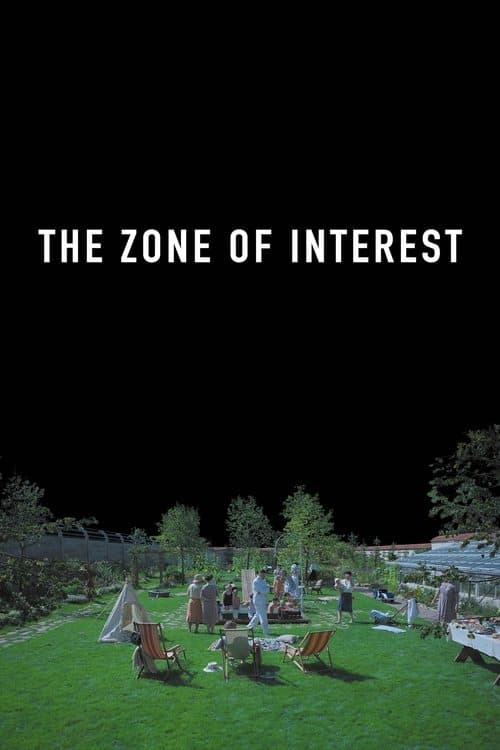
In The Zone of Interest, director Jonathan Glazer crafts a chilling portrait of domestic normalcy amid unimaginable horror. The film follows Rudolf Höss, the commandant of Auschwitz, and his wife Hedwig as they cultivate an idyllic life for their family in a spacious home adjacent to the concentration camp. Through subtle, observational cinematography, Glazer juxtaposes the Höss family's mundane routines—gardening, swimming, and family outings—with the distant yet omnipresent sounds of suffering: gunshots, screams, and the rumble of trains and furnaces. This "zone of interest" becomes a metaphor for the psychological compartmentalization that allows ordinary people to thrive in the shadow of atrocity.
As the story unfolds in 1943, Rudolf approves designs for a new crematorium, casually navigates the camp's grim realities, and even scolds subordinates for environmental negligence, like damaging lilac bushes or polluting the river with human remains. Hedwig, proud of her "paradise garden" fertilized by camp ashes, hosts her mother and revels in the spoils of confiscated Jewish belongings. Subtle acts of resistance flicker in the background, such as a Polish girl who sneaks food to prisoners and later plays haunting sheet music composed by an inmate. Tensions simmer when Rudolf receives a promotion that requires relocation to Berlin, forcing the family to confront the fragility of their insulated existence. Hedwig fights to stay, and Rudolf's work pulls him deeper into the machinery of genocide, culminating in a promotion tied to the extermination of Hungarian Jews.
The film's power lies in its restraint, never showing the camp's interior horrors directly but letting them seep into the frame through sound and implication. This builds to an ending that shifts from the personal to the existential, leaving viewers to grapple with the enduring legacy of complicity. For those searching for a Zone of Interest ending explained, this finale is a masterclass in ambiguity and moral reckoning, forcing us to confront how evil persists not just in overt acts, but in willful ignorance.
What Happens in the Ending
The final scenes of The Zone of Interest unfold with deliberate slowness, emphasizing isolation and descent. After a lavish SS party in Berlin, Rudolf Höss speaks to Hedwig over the phone, casually revealing that amid the revelry, his mind wandered to calculating the most efficient way to gas the very guests around him. This chilling nonchalance underscores his detachment, as he prepares to return to Auschwitz to oversee "Aktion Höss"—the deportation and murder of 700,000 Hungarian Jews.
As Rudolf leaves his Berlin office late at night, he begins descending a long, dimly lit stairway. Midway down, he pauses abruptly. His face contorts in discomfort; he retches repeatedly, dry-heaving into the shadows, but nothing comes up—a hollow gesture of nausea without release. He stares blankly into the enveloping darkness of the building's corridors, his expression a mix of exhaustion and vague disquiet. The camera lingers on this moment, capturing the subtle tremor in his posture.
Suddenly, the film cuts to the present day: a group of janitors methodically cleans the Auschwitz-Birkenau State Museum. They wipe down glass cases filled with artifacts—shoes, suitcases, and other remnants of the victims—under fluorescent lights, their movements efficient and detached. This interlude is silent, almost clinical, emphasizing the passage of time and the transformation of horror into history.
The scene then returns to 1944. Rudolf, still on the stairway, composes himself and continues descending, step by step, into deeper darkness. The screen fades to black, leaving no dialogue, no resolution—just the sound of his footsteps echoing into oblivion. No explicit confrontation or epiphany occurs; the film ends on this note of quiet, inexorable progression.
The Meaning Behind the Ending
At its core, the ending of The Zone of Interest symbolizes the moral abyss into which figures like Rudolf Höss willingly—or numbly—plunge. The stairway descent serves as a potent metaphor for his inexorable path deeper into the Nazi machinery, a literal and figurative journey into darkness. His retching moment hints at a flicker of human revulsion, perhaps the closest the film comes to showing internal conflict, but it's fleeting and unproductive. This isn't redemption; it's the body's betrayal of a mind long conditioned to suppress empathy. The phone call preceding it reinforces this: Rudolf's fantasy of gassing partygoers isn't born of rage but bureaucratic efficiency, illustrating how ideology warps even idle thoughts into instruments of death.
The cut to the present-day museum janitors adds layers of temporal depth, bridging 1944's perpetrators to today's stewards of memory. These anonymous cleaners, polishing the evidence of genocide, represent humanity's ongoing duty to confront the past—not through spectacle, but through quiet preservation. It suggests that the "zone of interest" extends beyond the Höss family; we, as viewers and inheritors, must clean up the remnants, lest history repeat. Thematically, the ending indicts the banality of evil, showing how personal ambition and domestic comfort enable systemic horror. Rudolf's darkness isn't just personal—it's the shadow cast by a society that normalized atrocity, reminding us that moral failure often looks like ordinary fatigue.
Character Arcs and Resolution
Rudolf Höss's arc traces a chilling evolution from dutiful family man to architect of mass murder, all without dramatic transformation. He begins as a provider—swimming with his children, approving crematoriums with pragmatic detachment—and ends in Berlin, elevated for his "efficiency" yet isolated in his retching solitude. His journey resolves not in growth, but in entrenchment: the promotion reunites him with his family, but at the cost of overseeing even greater slaughter. This "resolution" exposes his psychology—ambition trumps unease, family bliss justifies complicity—leaving him psychologically marooned in the dark.
Hedwig's arc mirrors this, evolving from proud homemaker to defensive guardian of her paradise. Her insistence on staying in Auschwitz, even as her mother's note shatters the illusion (implied by her outburst at servants), reveals a deeper denial. Though absent from the final scenes, her influence lingers in Rudolf's call, where domestic normalcy frames his genocidal musings. The children, too, arc toward inherited blindness, playing near pollution without question. Collectively, their "resolution" is stasis: no one confronts the horrors beyond the garden wall, underscoring how moral complexity dissolves in self-preservation.
Alternate Interpretations
The ending's ambiguity invites multiple readings, particularly around Rudolf's retching and the museum interlude. One interpretation sees the nausea as a suppressed moral crisis—a rare crack in his facade, symbolizing the inescapable human cost of his work finally surfacing. Yet, since he presses on, it could represent mere physical exhaustion from overwork, not ethical awakening; in this view, the film subverts redemption tropes, showing evil's resilience.
The present-day janitors offer another layer of ambiguity: Are they a hopeful note, implying history's lessons endure through preservation? Or a cynical one, where cleaning artifacts becomes rote, mirroring the Höss family's detachment? Some might read the entire ending as a descent into collective guilt, implicating modern audiences who "descend" into the film's darkness via screens, complicit in forgetting. These interpretations hinge on Glazer's sound design—the echoing footsteps evoke inevitability—allowing viewers to project their own unease onto the void.
Themes and Symbolism
The ending reinforces The Zone of Interest's central themes of compartmentalization and the proximity of evil. Symbolically, the garden represents curated innocence, fertilized by death, while the stairway embodies unchecked descent into barbarism—darkness not as metaphor, but literal obfuscation of truth. The Polish girl's acts of quiet resistance (hiding food, playing prisoner music) contrast the Höss's inertia, symbolizing sparks of humanity amid systemic darkness, though they remain peripheral.
Broader societal commentary emerges in how the film subverts Holocaust narratives: no heroes or villains in bold strokes, but flawed humans whose psychology enables atrocity. Themes of inheritance loom large—the children's oblivious play foreshadows generational trauma—while the museum scene symbolizes memory's fragility. Ultimately, the ending subverts closure, challenging viewers to extend the "zone" outward, questioning our own zones of disinterest in contemporary injustices.
Final Thoughts
The Zone of Interest ends not with catharsis, but with a lingering discomfort that elevates it to profound cinema. This finale works masterfully by denying easy answers, forcing us to inhabit Rudolf's darkness and reflect on our capacity for moral blindness. It's a contemplative gut-punch, blending psychological depth with unflinching commentary on how ordinary lives intersect with extraordinary evil. For audiences dissecting the Zone of Interest ending, it lingers as a mirror: in our own "idyllic" zones, what horrors do we tune out? Glazer's vision doesn't just explain history—it demands we reckon with its echoes.