Wall to Wall (2025): Ending Explained
"A life of debt, of endless noise, am I to blame?"
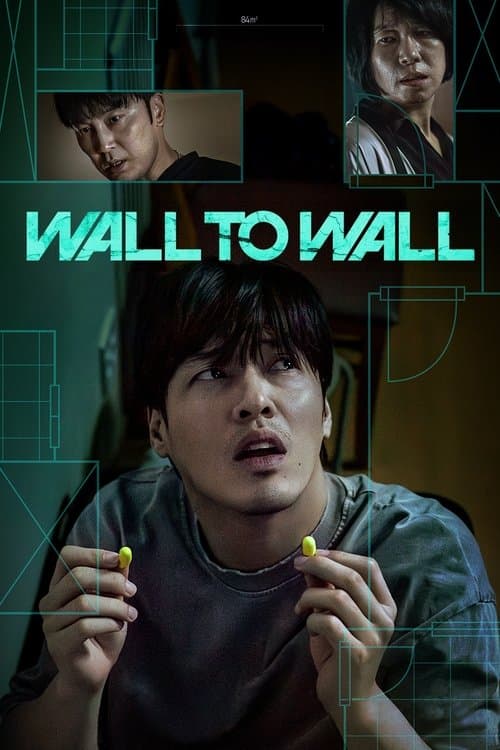
A man who poured his life savings into a new apartment discovers its walls are full of disturbing noises, hostile neighbors and unsettling secrets.
8 min read
Release Year: 2025
Rating: 6.178/10
Runtime: 118 minutes
By Luna Sterling
Wall to Wall (2025): Ending Explained
As a film critic who's spent years dissecting the quiet desperations and explosive revelations in modern thrillers, Wall to Wall (2025) stands out for its claustrophobic grip on the anxieties of urban life. Directed with a keen eye for the unseen fractures in society, this Korean drama transforms a simple apartment building into a microcosm of greed, deception, and fragile sanity. If you're here for the Wall to Wall ending explained, you're in the right place—I'll break down the literal events, unpack the symbolism, and explore how it ties into the film's deeper moral ambiguities. Spoilers ahead, naturally.
Quick Recap
Noh Woo-sung, a man in his thirties, sinks his life savings into a sleek Seoul apartment in 2021, dreaming of stability with his fiancée. But by 2024, a plummeting real estate market has slashed the property's value, leaving him drowning in ₩700 million in loans. His engagement crumbles under the financial strain, forcing Woo-sung into a grueling routine of day job drudgery and nighttime delivery gigs just to stay afloat.
The plot thickens when Woo-sung starts hearing inexplicable noises emanating from the walls—alarms at odd hours, thumps that disrupt his fragile peace. His neighbors, a mix of the hostile and the cryptic, compound the mystery: there's Joo-kyung from unit 1301, who leaves accusatory notes and intrudes with veiled warnings; Eun-hwa, the poised residents' representative in the penthouse; and Jin-ho, a seemingly affable figure who offers sympathy. Desperate for a way out, Woo-sung falls for a friend's crypto tip, selling his apartment to buy into GB Coin, which surges and briefly lifts his spirits—until he's accused of causing the very noises plaguing the building. A hidden subwoofer in his unit leads to a violent scuffle and his arrest, stripping him of his windfall as the coin crashes.
In custody, Woo-sung's suicidal despair is interrupted by more noises from 1301, propelling him into a frantic investigation. With Jin-ho's help, he uncovers layers of deceit: the subwoofer was remotely controlled from Jin-ho's apartment, revealing a sprawling setup of speakers, surveillance, and resident dossiers. Jin-ho confesses he's an undercover journalist fabricating the noise scandal to expose construction fraud in the building, using Woo-sung as an unwitting pawn. Their alliance leads to a tense break-in at the penthouse, where Eun-hwa and her husband—key players in the fraud—confront them amid shifting loyalties and violence.
What Happens in the Ending
The climax erupts in the penthouse as Woo-sung and Jin-ho demand the incriminating ledger from Eun-hwa and her husband, who have been manipulating the building's residents to cover up shoddy construction and financial scams. Alliances fracture in the chaos: Eun-hwa, cornered and ruthless, attempts to kill Woo-sung with a weapon, but a gravely wounded Jin-ho intervenes, attacking her in a brutal struggle. As Jin-ho weakly urges Woo-sung to seize the ledger for his exposé, Woo-sung pauses, his face a mask of weary resolve.
Ignoring Jin-ho's pleas, Woo-sung methodically lights the gas line, stuffing the apartment contract—his own symbol of lost dreams—into the flames along with all the evidence. The penthouse ignites, and Woo-sung walks calmly out of the building as the entire structure erupts in a massive explosion, flames licking the night sky. He collapses amid the debris, overcome by smoke and exhaustion.
The film cuts to Woo-sung recovering in a hospital bed, his body bandaged but his eyes hollow. Discharged, he retreats to his childhood home in the countryside, seeking solace in familiar surroundings—a brief respite where we see him resting, perhaps reflecting on the ruins of his life. Yet, the pull of the city proves inescapable; he returns to the smoldering remnants of the apartment complex, now a charred skeleton cordoned off by authorities.
As Woo-sung stands before the ruins, the sound of the familiar noise— that insidious alarm—begins again, emanating from somewhere unseen. Instead of dread or rage, he bursts into hysterical laughter, the camera lingering on his unhinged expression as the screen fades to black. It's a final, shattering beat that leaves audiences questioning whether the cycle has truly ended or merely evolved.
The Meaning Behind the Ending
At its core, the ending of Wall to Wall is a devastating commentary on the illusion of escape in a system rigged against the individual. Woo-sung's decision to burn the evidence isn't just destruction—it's a deliberate rejection of the very structures (literal and figurative) that ensnared him. The apartment contract, reduced to ash, symbolizes his emancipation from debt's chains, but at the cost of any hope for justice or redemption. The building's explosion represents a cathartic purge, mirroring how personal crises can consume entire communities built on lies, yet it also underscores the futility: Woo-sung's laughter amid the recurring noise suggests that the "walls" of societal pressure—financial, emotional, auditory—persist beyond physical destruction.
Thematically, this finale delves into the psychology of entrapment. Woo-sung's hysterical laughter isn't triumphant; it's the breakdown of a man who's internalized the chaos. It echoes the film's exploration of how isolation in modern urban life amplifies paranoia and moral compromise, turning neighbors into adversaries and secrets into weapons. By subverting the typical thriller resolution (where truth prevails), the ending forces us to confront the human truth that survival often demands complicity in the very corruption one fights.
Character Arcs and Resolution
Woo-sung's arc is the film's emotional spine, evolving from optimistic homeowner to a shattered everyman whose desperation forges unexpected resilience. His journey peaks in the penthouse, where he chooses personal annihilation over Jin-ho's quest for systemic exposé— a moment that resolves his arc not with victory, but with defiant agency. Returning to his childhood home offers a fleeting nod to lost innocence, but his pull back to the ruins shows how trauma loops inescapably. The laughter marks his psychological fracture: he's no longer the victim pleading for answers, but a man embracing the absurdity of his entrapment, finding a twisted liberation in madness.
Jin-ho, the faux ally turned true antagonist in intent, meets a grim end in the explosion, his journalistic idealism crushed under Woo-sung's pragmatism. Eun-hwa and her husband embody the elite's moral void, their failed schemes highlighting how power preys on vulnerability. Joo-kyung's earlier warnings, now contextualized as collateral in the fraud, resolve as tragic footnotes—victims of the same web. Collectively, the characters' resolutions paint a portrait of moral complexity: no heroes emerge unscathed, only survivors grappling with the cost of their illusions.
Alternate Interpretations
The ending's ambiguity invites multiple lenses, particularly around Woo-sung's laughter and the recurring noise. One reading sees it as hallucinatory descent: the sounds could be Woo-sung's fracturing psyche, projecting the building's chaos onto a destroyed site, implying his "return" is metaphorical—a mind trapped in eternal vigilance. This interprets the hysteria as suicidal ideation's echo, questioning if he ever left the hospital bed.
Alternatively, the noise might signal a literal cycle of corruption: perhaps the fraud's remnants (or a new scheme) persist in the ruins, with Woo-sung's laughter as bitter irony at society's unkillable underbelly. A more optimistic take posits the laughter as empowerment—Woo-sung, freed from loans and lies, mocks the system that tried to break him. These interpretations hinge on whether we view the finale as psychological realism or allegorical warning, leaving room for debate on free will versus inevitability.
Themes and Symbolism
Wall to Wall weaves broader themes of economic precarity and communal distrust, with the ending amplifying them through potent symbolism. The walls themselves—thin barriers hiding speakers and secrets—metaphorically represent the facades of modern life, where prosperity masks rot. The explosion subverts the "building" as a symbol of aspiration, turning it into a pyre that exposes (and erases) societal fraud, commenting on South Korea's real estate bubbles and the human cost of unchecked capitalism.
Noise recurs as a motif for suppressed truths: from Woo-sung's ignored alarms to the final auditory haunt, it symbolizes the cacophony of inequality that deafens individuals to collective action. Moral complexity shines in Woo-sung's betrayal of Jin-ho— a subversion of the whistleblower trope, suggesting that personal survival trumps public good in a world of moral grays. Ultimately, the ending reinforces themes of isolation's toll, urging viewers to question the walls we build around ourselves.
Final Thoughts
The ending of Wall to Wall is a masterstroke of contemplative unease, working brilliantly because it denies easy closure, mirroring the messy realities of financial ruin and ethical compromise. It's not a feel-good thriller payoff but a lingering meditation on resilience's dark side—Woo-sung's laughter haunts long after the credits, inviting rewatches to peel back its layers. For audiences grappling with their own "walls," this finale doesn't just explain; it indicts, making Wall to Wall a vital, if unsettling, addition to the genre. If you've seen it, what did that final laugh mean to you?