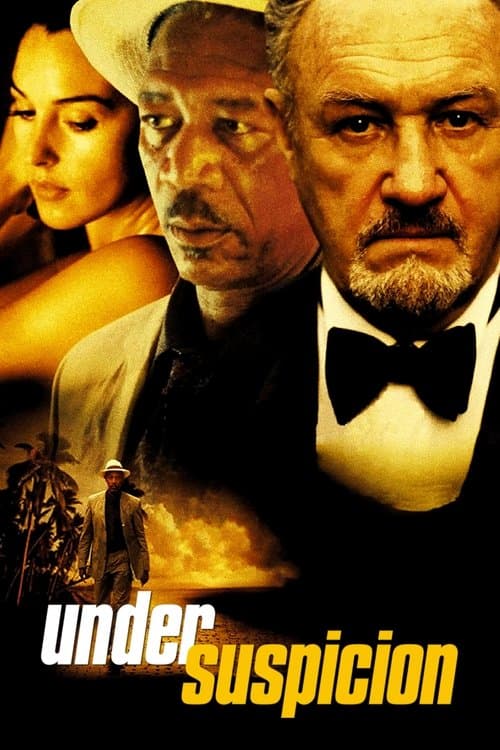
Under Suspicion (2000): Ending Explained
Hearst's false confession is exposed as a self-punishing surrender, and he walks away from the wife who manufactured the evidence against him
7 min read
Release Year: 2000
Rating: 6.1/10
Runtime: 110 minutes
By Ellis Carver
The short answer
The short answer
Henry Hearst walks out of the police station a free man and straight into the San Sebastián Festival crowd without his wife. That's the ending, and it's a strange one for a movie that spent ninety minutes building a rape-and-murder case against him. Hearst is cleared not because the interrogation exonerated him but because a different man got caught. He'd already confessed. He confessed knowing he hadn't done it, because Chantal let the police tear apart their house and then handed them photographs that made him look guilty, and by the time those photographs landed on the table in front of him he'd decided his wife wanted him destroyed and he might as well give her what she wanted. The real killer's arrest doesn't restore anything. It just proves the confession was a surrender, not a fact. And Hearst's last move, the one the film actually cares about, isn't relief. It's the refusal to forgive her.
The contract
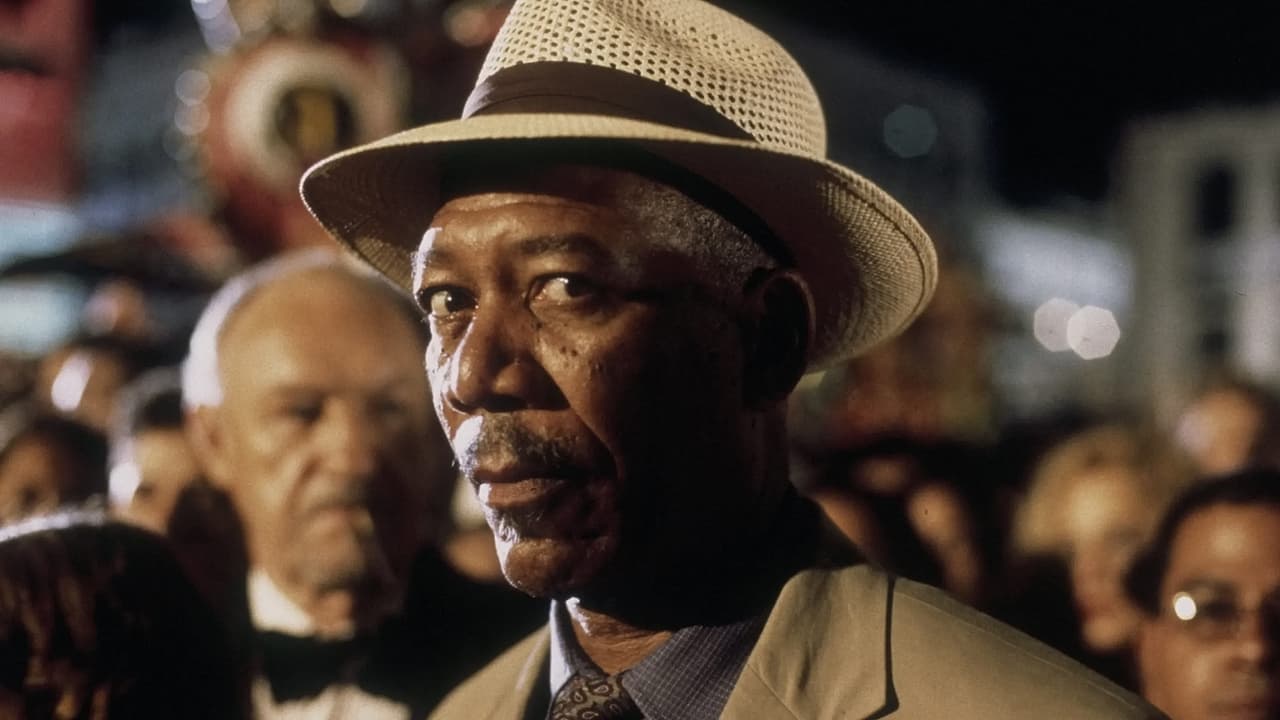
The film opens as a procedural. A wealthy tax attorney, Hearst, is pulled off the street on his way to give a fundraising speech during the San Sebastián Festival and brought to a police station to answer questions about a girl's body he found the day before. Captain Victor Benezet and Detective Felix Owens have inconsistencies in his story, and Hearst keeps revising it. That's the deal the movie makes with you in the first act: this is a whodunit with a suspect under pressure. You'll watch the alibi bend, you'll watch the forensic evidence accumulate, and at the end you'll learn whether the man in the chair did it.
The contract has a second clause, and it's the important one. The film promises that the truth is recoverable. Benezet's whole method is that the story keeps changing and the changes are the evidence. Every time Hearst says he was somewhere he wasn't, or blames Chantal for jealousy, or swears he barely knew the girl, the interrogation gets closer to a fact that can be nailed down. The genre's promise isn't just "we'll find the killer." It's "there is a killer to find, and the machinery of questioning will produce him." You're watching a man being squeezed until something true comes out.
The breach
It never does.
Chantal, who legally owns the mansion they live in, gives the police permission to search it. In the dark room, they find photographs of the two murdered girls. That's the hard evidence the whole film has been building toward, and it's the moment the procedural promise gets honored right up until it doesn't. Shown the photographs at the station, Hearst says he can't believe Chantal would go this far. He isn't denying the pictures. He's denying her.
The surrender
Deeply hurt by what he reads as his wife's betrayal, and apparently deciding this is the only thing that will satisfy her, Hearst starts confessing to the murders. He uses the details Benezet fed him during hours of questioning. This is the breach, and it's a quiet one. The genre expects a confession to be a collapse into truth. This is a collapse into a story, assembled from the interrogator's own material, offered as a kind of gift to a woman Hearst believes wants him gone.
The interruption
Benezet is still recording the confession when he's notified that the real killer has been arrested, caught in the act, with damning photographs of his other victims. The tape is rolling. The confession is on it. It doesn't matter.
The release
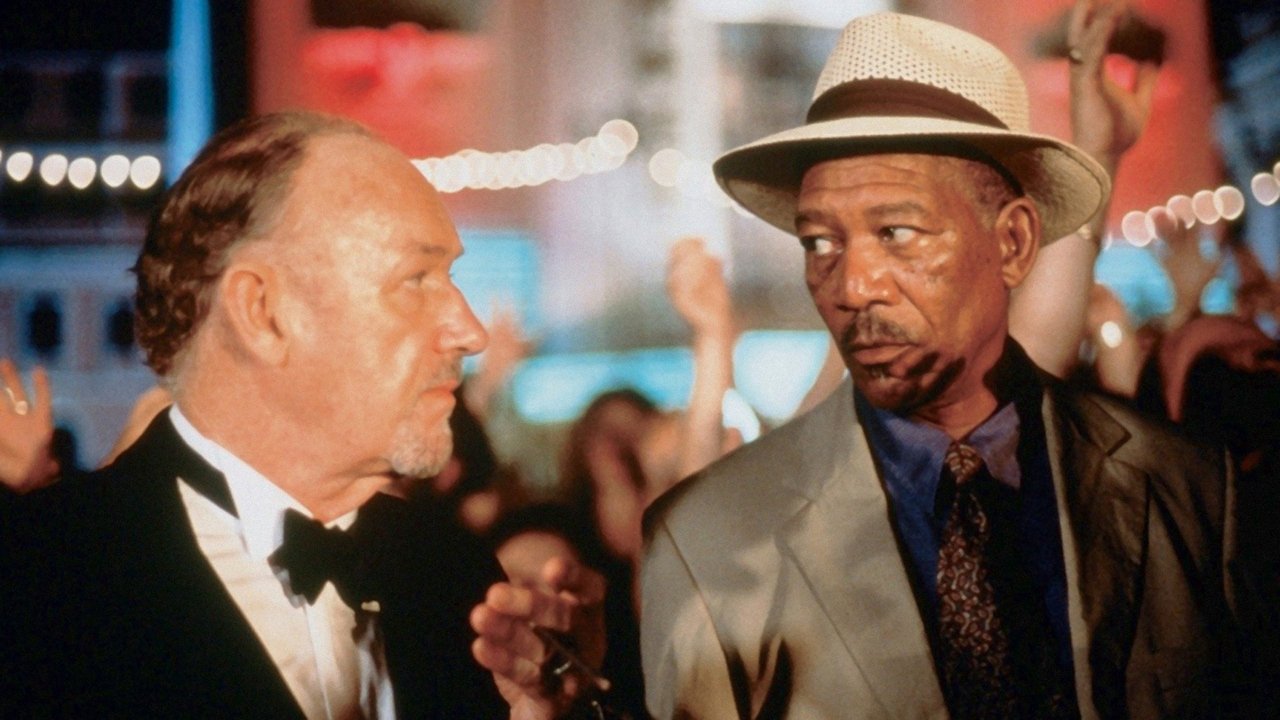
Benezet and Owens free Hearst. He's badly shaken. Outside, Chantal tries to reach him. He can't forgive her. He walks away into the crowd of San Sebastián Festival revelers and the film ends there.
So the promise breaks twice. The confession wasn't true, which voids the procedural payoff: the interrogation produced a statement that had nothing to do with guilt. And the arrest that actually solves the case happens off-screen, delivered as a notification, the least dramatic possible resolution to a murder mystery. The genre wants the detective to win by deduction. Here the killer is caught the way killers are usually caught in real life, by luck and a patrol car.
Why it does it
The photographs are the hinge, and they cut both ways. The same kind of object that appears to damn Hearst, pictures of the murdered girls hidden in his house, is what confirms the real killer's guilt. That symmetry tells you what the dark room find actually was. The photographs were planted. Chantal manufactured the evidence.
That reframes every inconsistency Benezet spent the film prying at. The genre wants you to read Hearst's shifting story as the slippage of a guilty man. The ending proposes a different reading: he's a man with a lot to hide that isn't murder. He likes cheap young prostitutes. He visits pornography sites. He admits a fondness for younger women while denying he molested Chantal's thirteen-year-old niece Camille. His lies are about appetite and shame, not homicide, and the film's last act reveals that the procedural was pointed at the wrong secret the entire time.
Which means the breach isn't a cheat. It's the point. A murder mystery that ends with the suspect confessing and then being released because the real killer was caught elsewhere is a murder mystery that has just told you the murder was never the subject. The confession lands as an act of despair rather than guilt, and the arrest that follows renders it moot. The film built a case out of a man's private degradations and then let a stranger's arrest wipe the whole thing away, as if to say the case was never about the crime.
What the film becomes
The genre it looks like
A police procedural romance of the interrogation room. Two cops, one suspect, a clock running down toward a speech at a party. The pleasure is watching the story change under pressure until it cracks open and the truth falls out. The killer is identified by method, and the method is the movie.
The genre it actually is
A marriage film wearing a procedural as a coat. The murder is a pretext for a wife to destroy a husband using the state as her instrument. The real case being tried is Chantal's, and the verdict is that Henry would rather confess to two murders than keep fighting a woman who fed his house to the police. The mystery is irrelevant by design; the arrest is a notification because the crime was never the climax.
That's the switch. The film's actual antagonist isn't the man who got caught with photographs of his victims. It's the person who chose the moment to hand over photographs of hers. And the ending won't let you feel good about the resolution, because the resolution leaves Hearst free and alone in a festival crowd, having just tried to give his wife the only thing he thought she wanted.
The verdict
The verdict
The ending of Under Suspicion means exactly what Hearst does at the door: he doesn't take her back. Everything before that is machinery. The interrogation was real, the pressure was real, the confession was real, and none of it matters, because the film's actual subject was always the marriage and the way one spouse can use an accusation as a weapon. When Benezet and Owens let him go, Hearst is exonerated and still ruined. He confessed to murders he didn't commit not because he broke under questioning but because he read the planted photographs as Chantal's final answer about what she wanted from him, and he decided to give it to her. The real killer's arrest takes that decision back but can't undo it. What's left is a man walking into a crowd during the San Sebastián Festival, with his wife behind him and no interest in turning around. The mystery gets solved off-screen. The marriage gets solved in the last shot, and the answer is no.