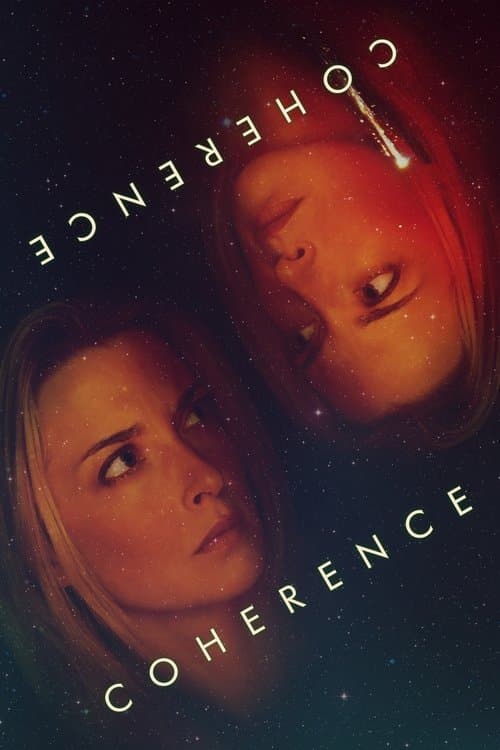
Coherence (2014): Ending Explained
"Rearrange your brain."
Four couples gather for dinner the night a mysterious and powerful comet passes overhead.
10 min read
Release Year: 2014
Rating: 7.221/10
Runtime: 89 minutes
By Luna Sterling
Coherence (2014): Ending Explained
In the dim flicker of candlelight and the eerie glow of comet-streaked skies, Coherence (2014) unravels the fragile threads of reality itself. Directed by James Ward Byrkit, this low-budget mind-bender traps eight friends in a night of escalating paranoia and existential dread, all triggered by the passage of Miller's Comet. As a film critic who's dissected countless tales of fractured psyches, I find Coherence's ending to be a masterstroke of psychological unease—a lingering chill that seeps into your bones long after the credits roll. If you're searching for a Coherence ending explained, buckle up: we'll dissect the chaos, probe the shadows of its meaning, and navigate the film's slippery ambiguities, all while keeping the tension palpable.
Quick Recap
The film opens with a seemingly ordinary dinner party at Mike and Lee's cozy home, where the air hums with unspoken tensions—Emily's reluctance to join her boyfriend Kevin on a trip abroad, Amir's awkward arrival with Kevin's ex, Laurie, and the subtle undercurrents of flirtation and resentment among the group. As Miller's Comet streaks overhead, casting an otherworldly pallor over the suburban night, a sudden power outage plunges the neighborhood into darkness. Candles and blue glow sticks become their fragile lifelines, illuminating fractured conversations and a growing sense of isolation. But something's off: a shattered glass appears from nowhere, cell phones lose signal, and across the street, one house blazes with unnatural light.
Curiosity turns to terror as Hugh and Amir venture to the lit house, returning with a mysterious box containing photos of the group—each marked with cryptic numbers on the back—and Hugh sporting a fresh cut on his forehead. Peering through windows, they glimpse doubles of themselves at a mirrored dinner table. Drawing from Hugh's borrowed book on quantum decoherence, the friends theorize that the comet has splintered reality into parallel worlds, with dark patches outside acting as unstable portals. Notes left and found, encounters with red-glow-stick doppelgangers, and revelations of infidelity (like Mike's affair with Beth) escalate the paranoia. Realities multiply—more than two, it seems—as the group realizes intruders from other worlds have slipped in among them. They craft their own identification box with dice-rolled numbers and random objects to sort who's who, uncovering a mosaic of swapped identities: Emily, Kevin, and Laurie from one reality; Hugh and Amir from another; Mike from a third; only Lee and Beth native to this house.
As the comet's influence peaks, violence erupts—a duplicate Mike breaks in, attacks his counterpart, and flees. Emily, piecing together the dread like shards of that inexplicable glass, confronts the horrifying truth: even Kevin, her anchor, is not who he seems. The house, once a sanctuary, now pulses with the metallic tang of fear-sweat and the distant rumble of cosmic indifference, setting the stage for a desperate bid to reclaim stability.
What Happens in the Ending
The final act of Coherence unfolds in a haze of disorientation and raw survival instinct, the camera lingering on sweat-slicked faces and the comet's fragmented glow bleeding through windows like fractured veins in the sky. After the group's box experiment exposes the patchwork of realities—confirming only Lee and Beth as originals, while others are unwitting invaders—tensions snap like overtaut wires. A blackmail note slides under the door, exposing Mike's affair with Beth in stark, ink-bleeding script, amplifying the betrayal's sting amid the chaos. Then, chaos incarnate: a duplicate Mike bursts through the door, his eyes wild with mirrored rage, assaulting his original self in a brutal, grunting melee of fists and furniture before vanishing into the night.
Emily, her pulse a thunderous drum in her ears, seizes control amid the group's fracturing trust. She slips outside into the inky voids between houses, the air thick with the comet's electric hum and the crunch of gravel underfoot. Peering into windows like a ghost haunting her own life, she scans alternate versions of the party—some shattered by violence, others oblivious—until she finds a "stable" house where no one seems aware of the splits, the laughter inside a mocking echo of normalcy. With calculated ferocity, she shatters Hugh's car window to lure them out, then ambushes her double: sedating her with ketamine snatched from the glovebox, the chemical's sharp, medicinal bite cutting through the night's chill. She locks the sedated Emily in the trunk, her breaths shallow and muffled, but the plan frays when another Emily—crawling, disheveled, eyes wide with primal terror—emerges from the bathroom shadows.
A visceral struggle ensues in the dim bathroom, the air heavy with the coppery scent of exertion and the slick slide of bodies on tile. Emily subdues her intruder, hiding her away, but not before losing her own engagement ring in the fray—a small, glittering casualty symbolizing her grip on identity slipping away. Victorious yet hollow, she retrieves the ring from her defeated double's finger, its cold metal a tainted talisman, and returns to the living room. As Miller's Comet fractures overhead in a silent celestial implosion, she collapses onto the sofa, the room spinning in a vortex of exhaustion and relief.
Dawn breaks with deceptive calm, sunlight filtering through curtains like a forgotten promise. Emily stirs on the sofa, the partygoers rousing around her, their faces blurred by the haze of a night half-remembered. Kevin, ever the concerned partner—or is he?—hands her the ring, claiming he found it in the bathroom, his touch warm but laced with an undercurrent of unease. Then, the phone rings, its shrill tone slicing the morning quiet like a knife through fog. Kevin answers, and the voice on the line is Emily's—her own words, distant and insistent, echoing from some unfathomable elsewhere. She stares at the two rings now in her palm—one hers, one stolen—her eyes locking with Kevin's as the camera holds on her dawning horror, the screen fading to black on that frozen, skin-crawling moment.
The Meaning Behind the Ending
At its core, the ending of Coherence is a gut-punch meditation on the illusion of self and the terror of multiplicity, where the comet's passage doesn't just split realities but exposes the rotten core of human connections. Emily's desperate replacement of her double isn't mere survival; it's a metaphor for the frantic grasping at authenticity in a world of facsimiles. The ring, that once-romantic symbol, becomes a poisoned emblem of deception—stolen, duplicated, and now doubled in her hand—mirroring how relationships in the film are revealed as fragile constructs, easily swapped or betrayed. The phone call's final twist, Emily hearing her own voice from the void, underscores the film's theme of inescapable entanglement: no victory over the chaos is pure, as the boundaries between "me" and "not me" dissolve into a psychological abyss.
This climax evokes the visceral dread of realizing your life is a counterfeit, the comet's disintegration symbolizing the collapse of quantum certainties into personal entropy. It's not about cosmic spectacle but the intimate horror of doubt—the way a lover's glance or a familiar voice can suddenly feel alien, leaving you adrift in a sea of what-ifs. Byrkit crafts this as a warning: in our quest for control, we risk becoming the monsters we fear, our actions rippling into infinities we can never fully escape.
Character Arcs and Resolution
Emily's arc drives the film's emotional core, transforming from a hesitant observer—wrestling with her faltering relationship with Kevin amid the party's petty dramas—into a primal survivor, her hands stained by the necessities of a fractured world. Her journey peaks in that bathroom brawl, where vulnerability hardens into resolve, but the resolution is bitterly incomplete: waking to a seemingly restored normalcy, she's left questioning if she's the original or just another echo, her agency a double-edged blade that severs as much as it saves.
Kevin, revealed as an interloper, embodies the film's relational fractures; his casual return of the ring offers false closure, his arc unresolved in the haze of ambiguity. Mike's violent encounter with his double resolves his arc in blood and exposure, his infidelity laid bare, forcing a confrontation with his own duplicities. Lee and Beth, the house's true anchors, fade into the background, their stability a quiet irony amid the swaps—yet even they bear the scars of the night's revelations. Collectively, the group doesn't reunite; they scatter into a morning that feels like a truce with the unknown, each arc bending toward isolation rather than harmony, the comet's wake leaving them forever altered, their bonds as unreliable as the realities they inhabit.
Alternate Interpretations
Coherence's ending thrives on ambiguity, inviting viewers to spiral through its interpretive shadows. One reading posits Emily's actions as a successful reset: by infiltrating the stable house and collapsing the unstable ones, she engineers a "prime" reality, the phone call merely a fading echo of the chaos, like static on a detuned radio. This optimistic lens sees her dual rings as symbols of reclaimed wholeness, the group's ignorance a hard-won peace.
Conversely, a darker interpretation suggests perpetual fracture: the phone call implies Emily's swap failed, trapping her in yet another flawed reality where she's still the outsider, her "self" on the line a harbinger of endless cycles. Perhaps the comet's breakup didn't end the splits but multiplied them infinitely, rendering all resolutions illusory—Emily's victory just another layer of the onion, peeling back to reveal more dread. Some might even view it as psychological allegory, the "realities" manifesting the group's collective neuroses, with Emily's violence a metaphor for suppressing her insecurities, the call her subconscious screaming back. These layers keep the tension alive, turning the ending into a Rorschach test of unease.
Themes and Symbolism
The ending reinforces Coherence's core themes of identity's fragility and the quantum unpredictability of human bonds, subverting the dinner-party trope into a pressure cooker of existential horror. The comet symbolizes disruptive forces—be it cosmic events or personal crises—that expose hidden truths, its fragmentation echoing the splintered selves and relationships. Glow sticks (blue versus red) serve as visceral markers of "us versus them," their chemical luminescence a fleeting glow against the devouring dark, much like the illusions of trust that flicker and fail.
Broader, the film probes isolation in connectivity: in a world of doubles, authenticity becomes a myth, subverting expectations of resolution for a lingering psychological itch. Violence as identity theft—Emily's sedation and ring-theft—symbolizes how we "replace" parts of ourselves or others to cope, while the house itself, warm yet violated, stands for the home as a false sanctuary. These elements weave a tapestry of subtle dread, challenging viewers to question their own realities long after the lights come up.
Final Thoughts
Coherence's ending is a triumph of intimate terror, distilling quantum weirdness into a palpable, heart-pounding climax that lingers like a half-remembered nightmare. It works brilliantly because it denies easy answers, leaving you in the uneasy space between certainty and chaos—much like life itself. For fans of mind-bending cinema, this finale cements the film's cult status, rewarding rewatches with fresh layers of unease. If you've emerged from the film with your sense of self rattled, that's the point: in the end, Coherence reminds us that reality, like a comet's tail, is beautiful, fleeting, and utterly disorienting.