Conclave (2024): Ending Explained
"What happens behind these walls will change everything."
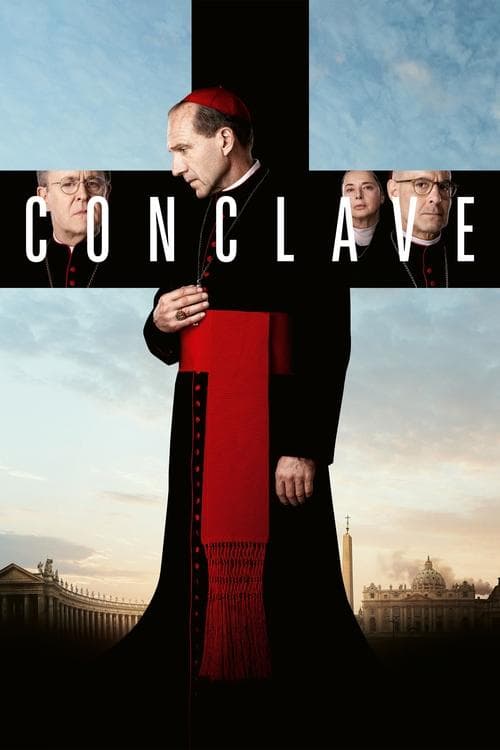
After the unexpected death of the Pope, Cardinal Lawrence is tasked with managing the covert and ancient ritual of electing a new one. Sequestered in the Vatican with the Catholic Church’s most powerful leaders until the process is complete, Lawrence finds himself at the center of a conspiracy that could lead to its downfall.
8 min read
Release Year: 2024
Rating: 7.2/10
Runtime: 120 minutes
By Luna Sterling
Conclave (2024): Ending Explained
In the shadowed halls of the Vatican, where whispers carry the weight of centuries and every glance hides a veiled ambition, Conclave (2024) unfolds as a taut thriller of faith, power, and hidden truths. Directed with a masterful blend of intrigue and introspection, the film plunges us into the secretive conclave electing a new pope after the sudden death of the previous one. As cardinals grapple with scandals, conspiracies, and their own fractured ideals, the air thickens with the scent of incense and suspicion, building to a finale that shatters expectations like stained glass under pressure. If you've just watched and are left pondering the explosive revelations and quiet aftermath, this ending explained breaks it down—literally and thematically—without spoilers beyond the finale.
Quick Recap
The film opens with the unexpected death of the pope from a heart attack, thrusting Cardinal Thomas Lawrence (Ralph Fiennes), the dean of the College of Cardinals, into the role of overseeing the ancient ritual of papal election. Sequestered within the Vatican's impenetrable walls, a diverse array of cardinals emerges as frontrunners: the progressive reformer Aldo Bellini (Stanley Tucci) from the United States, the socially conservative Joshua Adeyemi (Lucian Msamati) from Nigeria, the moderate Joseph Tremblay (John Lithgow) from Canada, and the unyielding traditionalist Goffredo Tedesco (Sergio Castellitto) from Italy. Tensions simmer from the start, laced with intrigue—rumors of Tremblay's resignation demands from the late pope, Bellini's vow to block Tedesco, and the mysterious late arrival of Vincent Benítez (Carlos Diehz), a Mexican-born archbishop from Kabul secretly named a cardinal in pectore.
As deliberations begin, Lawrence delivers an impromptu homily urging the cardinals to embrace uncertainty, a speech that ripples through the room like a chill draft, hinting at his own buried ambitions. No clear winner emerges in the initial votes, with Adeyemi leading but the progressive vote splintering between Bellini and Lawrence. Lawrence's assistant, Monsignor Raymond O'Malley (Edward Balzan), uncovers oddities, like the pope funding a canceled medical trip for Benítez to Geneva. The second day brings scandal: an altercation exposes Adeyemi's past illicit relationship with a nun, Sister Shanumi, derailing his candidacy through whispered sabotage. Bellini shifts support to Tremblay, but Lawrence, aided by the sharp-eyed Sister Agnes (Isabella Rossellini), digs deeper, revealing Tremblay's vote-buying schemes and manipulations, including Shanumi's forced transfer. By the third day, Tremblay is exposed and ousted, leaving Lawrence to reconcile with Bellini and position himself against the increasingly belligerent Tedesco.
What Happens in the Ending
The finale erupts in a crescendo of chaos and revelation, the Vatican's sanctity fracturing under external and internal pressures. As the cardinals reconvene for what could be the decisive vote, Lawrence casts his ballot for himself, a quiet act of resolve amid the suffocating tension of the Sistine Chapel. But before the count can proceed, a deafening explosion rocks the chamber—shards of ancient frescoes tremble, and the acrid smell of smoke seeps through the cracks as Lawrence is hurled to the floor. The blast, part of a wave of suicide bombings tearing through Europe, shatters a window, allowing a sliver of harsh daylight to pierce the gloom.
In the stunned aftermath, Tedesco rises with fiery rhetoric, demanding a holy war against Islam, his voice echoing like thunder in the damaged hall. Benítez counters with a piercing rebuke, his words cutting through the haze of fear and politics: he condemns the cardinals for letting agendas eclipse their shared faith and urges restraint against retaliatory violence. Chastened, the group resumes voting, the broken window now framing a symbolic shaft of light that bathes the ballots. In a swift, unanimous surge, Benítez is elected, choosing the name Innocent XIV—a nod to historical popes marked by controversy and renewal.
Lawrence's initial joy curdles into unease when O'Malley whispers about Benítez's mysterious canceled appointment. Confronting the new pope in a dimly lit corridor, the air heavy with unspoken dread, Benítez discloses a profound secret: born with both male and female reproductive organs—uterus and ovaries undetected until an appendectomy revealed them—he had scheduled a hysterectomy in Geneva but canceled it, choosing to "remain as God made him." The revelation hangs like a veil torn asunder. Lawrence, adrift, wanders the Vatican grounds amid the distant roar of cheering crowds, their voices a muffled tide of hope. He returns to his sparse room, flings open the window to the cool evening air, and gazes down at three young nuns in the courtyard below, their light chatter a fragile counterpoint to the weight of what he's witnessed.
The Meaning Behind the Ending
At its core, the ending of Conclave symbolizes the Vatican's—and humanity's—confrontation with the divine unknown, where certainty crumbles like the chapel's walls. The explosion isn't mere plot device; it's a visceral rupture, mirroring the internal blasts of scandal that have exposed the cardinals' hypocrisies. The light streaming through the broken window evokes biblical motifs of enlightenment amid destruction, suggesting that true revelation often emerges from violence and vulnerability. Benítez's election as Innocent XIV carries layered irony: "Innocent" harks to popes who navigated heresy and reform, but here it underscores purity in imperfection—his intersex condition as a metaphor for the Church's need to embrace the full spectrum of God's creation, beyond rigid doctrines.
Psychologically, the finale delves into the tension between control and surrender. Lawrence's arc peaks in this moment of exposure, where his quest for transparency forces the conclave to reckon with uncomfortable truths. The bombings externalize the ideological wars within, critiquing how faith can be weaponized, yet Benítez's plea for non-violence reasserts a core tenet: compassion over conquest. The ending whispers that the papacy, like Benítez's body, is a vessel of divine mystery, not human perfection— a subtle indictment of institutional rigidity in a fracturing world.
Character Arcs and Resolution
Thomas Lawrence's journey, from reluctant overseer to a man haunted by the conclave's shadows, resolves in quiet ambiguity. His dogged pursuit of truth—breaking into sealed apartments, allying with nuns like Agnes—strips away the veils of corruption, but it leaves him isolated, staring at the chattering nuns as if glimpsing a simpler faith he can no longer grasp. He's the moral compass, yet his ambition flickers unmet, evolving from doubt to a weary acceptance of uncertainty.
Benítez transforms from enigmatic outsider to pivotal savior, his secret revelation completing an arc of hidden grace. By rejecting surgery, he embodies radical authenticity, resolving the film's undercurrent of concealed identities. The other candidates' arcs shatter: Tremblay's downfall humbles his scheming moderation; Adeyemi's scandal buries his conservatism in personal frailty; Tedesco's war cry exposes his zeal as divisive poison; and Bellini's reconciliation with Lawrence marks his progression from strategist to supporter of genuine reform. Collectively, they yield to Benítez, their resolutions a collective exhale—flawed men yielding to a pope who mirrors their complexities.
Alternate Interpretations
The ending's ambiguities invite multiple lenses, particularly around Benítez's condition and its implications for the Church. One reading sees it as a progressive triumph: his intersex nature challenges gender binaries, positioning Innocent XIV as a beacon for inclusivity, potentially reshaping doctrine on identity and sexuality. Yet, a more conservative view might interpret his choice to forgo surgery as affirming traditional views—God’s design unaltered—subverting expectations of radical change.
Lawrence's final gaze at the nuns could signify renewal, the younger generation carrying untainted faith forward, or isolation, his window framing a world he's forever separated from. The explosion, too, branches: a literal terror attack, or a metaphor for the Church's explosive internal conflicts? These layers ensure the ending lingers, defying singular closure and mirroring the homily's call to embrace uncertainty.
Themes and Symbolism
Conclave weaves themes of power's corruption, faith's fragility, and the human cost of divine ambition, all amplified in the finale. Symbolism abounds: the Sistine Chapel's damage evokes Michelangelo's Creation of Adam—divine touch disrupted, yet the light persists as hope. Benítez's body symbolizes the Church as a tapestry of hidden diversities, subverting the conclave's patriarchal tensions. Broader motifs of secrecy versus revelation underscore how whispers (scandals, secrets) erode sanctity, while the crowds' cheers contrast the cardinals' cloistered dread, highlighting faith's communal versus institutional faces. The ending reinforces that true leadership demands vulnerability, subverting the thriller genre's tidy resolutions with psychological unease.
Final Thoughts
Conclave's ending is a masterstroke of atmospheric tension, blending visceral shocks with introspective whispers to leave viewers in a haze of awe and disquiet. It works brilliantly by tying personal revelations to global turmoil, making the Vatican's microcosm feel urgently real—the smoke of explosions mingling with the soul's quiet unraveling. For a film steeped in ritual, this finale feels alive, unpredictable, urging us to question not just the Church, but our own concealed truths. If it doesn't fully resolve every thread, that's its power: in a world of certainties, it chooses the divine ambiguity of the human spirit. A must-rewatch for its evocative depth—perfect for fans of intellectual thrillers like The Da Vinci Code, but with far more soul.