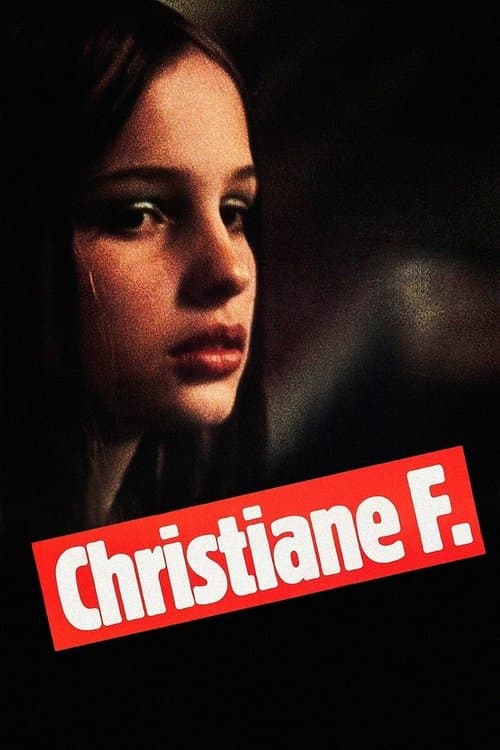
Christiane F. (1981): Ending Explained
"The image of a generation."
This movie portrays the drug scene in Berlin in the 70s, following tape recordings of Christiane F. 14 years old Christiane lives with her mother and little sister in a typical multi-storey apartment building in Berlin. She's fascinated by the 'Sound', a new disco with most modern equipment. Although she's legally too young, she asks a friend to take her. There she meets Detlef, who's in a clique where everybody's on drugs. Step by step she gets drawn deeper into the scene.
8 min read
Release Year: 1981
Rating: 7.3/10
Runtime: 131 minutes
By Ellis Carver
Christiane F. (1981): Ending Explained
As a film critic who's long been drawn to the raw underbelly of coming-of-age stories, Uli Edel's Christiane F. stands out for its unflinching gaze into the abyss of 1970s Berlin's drug subculture. Based on the real-life tapes of teenager Christiane Felscherinow, the film doesn't just document addiction— it dissects the fragile psychology of youth ensnared by glamour and despair. In this ending explained, we'll unpack the film's harrowing conclusion, exploring its literal events, symbolic weight, and the moral ambiguities that linger like smoke from a shared needle. If you're searching for Christiane F. ending explained, this deep dive reveals why the finale hits with such devastating, contemplative force.
Quick Recap
Christiane F. follows 13-year-old Christiane (played with heartbreaking authenticity by Natja Brunckhorst) as she navigates the dull confines of her family's social-housing apartment in West Berlin. A devoted David Bowie fan, she's restless in her drab life with her mother, younger sister, and pet cat. Her escape begins when she sneaks into the trendy Sound nightclub, underage and dolled up in heels and makeup, courtesy of her classmate Kessi. There, she meets the charismatic Detlev (Thomas Haustein), part of a clique immersed in the escalating drug scene—from pills and LSD to the seductive pull of heroin.
As Christiane's infatuation with Detlev deepens, so does her descent. She experiments with heroin after a Bowie concert, chasing closeness with him and the intoxicating freedom it promises. By her 14th birthday, school and home fade into the background; she's hooked, living in squalid shared apartments and drawn to the notorious Bahnhof Zoo station, a hub of trafficking and desperation. To fund her habit, she mirrors Detlev by turning to prostitution, her innocence eroding amid the cold transactions. An overdose at home exposes her secret, leading to a torturous cold-turkey attempt with Detlev, but relapse is inevitable upon returning to the station. The deaths mount—first roommate Axel from a poisoned batch of heroin, then the shattering news of Babsi's overdose—pushing Christiane to her breaking point as theft and isolation consume her world.
What Happens in the Ending
The film's final scenes unfold with a stark, almost documentary-like intensity, stripping away any veneer of glamour to reveal unfiltered ruin. After fleeing in horror from Detlev's apartment—where she interrupts him in a graphic, degrading encounter with a male client—Christiane, shattered and alone, returns to Bahnhof Zoo in search of Babsi. The station, once a symbol of illicit thrill, now feels like a graveyard of lost youth. There, she's confronted by the brutal reality splashed across newspaper front pages: Babsi, her young friend, has died from a heroin overdose at just 14. The headlines scream the epidemic's toll, amplifying Christiane's isolation amid the indifferent bustle of commuters and dealers.
In a moment of profound despair, Christiane—haunted by the deaths of Axel, Babsi, and so many others in her circle—decides she can no longer endure the cycle. She attempts suicide by overdosing on heroin, injecting in a desperate bid for escape. The screen fades into ambiguity as her body slumps, the weight of her choices pressing down. But a poignant voice-over narration breaks the silence, revealing that Christiane survives the attempt. Her mother, recognizing the depths of her daughter's crisis, takes her to a quiet village near Hamburg to recover with her grandmother and aunt. The narration extends a somber update: most of Christiane's cohort have either perished from overdoses or remain trapped in addiction. Detlev's fate hangs unknown, a loose thread underscoring the film's refusal to tie up every end neatly.
These closing moments are deliberately sparse, relying on Christiane's vacant expressions and the stark urban decay to convey the emotional void, culminating in that voice-over as a bridge from chaos to fragile reprieve.
The Meaning Behind the Ending
At its core, the ending of Christiane F. serves as a requiem for innocence devoured by societal shadows, symbolizing the heroin epidemic's indiscriminate harvest of young lives. Christiane's suicide attempt isn't portrayed as a dramatic climax but as an inevitable exhale—a psychological surrender to the addiction's moral complexity, where the line between seeking oblivion and outright self-destruction blurs. The Bahnhof Zoo, reimagined in these scenes as a metaphor for Berlin's underclass limbo, stands in for the broader trap of urban alienation: a place of fleeting connections that devolve into isolation, much like the drugs that promised community but delivered solitude.
The voice-over, drawn from Christiane's real tapes, injects a layer of meta-reality, reminding us this isn't fiction but a testimonial. It represents survival not as triumph, but as a tentative mercy amid unrelenting loss—a subtle commentary on resilience's quiet, unglamorous nature. Thematically, the ending underscores the film's exploration of addiction as a warped rite of passage, where youthful curiosity collides with adult indifference, leaving behind a moral ambiguity: Is Christiane's relocation to the countryside a true redemption, or merely a geographic pause in an unending internal war?
Character Arcs and Resolution
Christiane's arc traces a heartbreaking erosion from wide-eyed dreamer to hollowed survivor, her psychology fracturing under the twin pressures of love and dependency. What begins as a quest for excitement—fueled by Bowie's allure and Detlev's charm—ends in a raw confrontation with her own agency, or lack thereof. Her survival and relocation mark a partial resolution: she's pulled from the vortex, but the voice-over implies the scars of prostitution, theft, and loss will define her, highlighting the irreversible psychological toll on a child's moral compass.
Detlev, the catalyst for her fall, embodies the seductive pull of the scene—charismatic yet complicit, his arc unresolved and deliberately so. Walking in on his degrading encounter shatters Christiane's idealized view, forcing her to see the human cost of their shared desperation. His unknown fate mirrors the film's commentary on addiction's anonymity: many like him vanish into the margins, their journeys unfinished, emphasizing how the subculture consumes without mercy. Supporting characters like Babsi and Axel serve as cautionary echoes, their deaths resolving Christiane's arc by catalyzing her breaking point, yet underscoring the collective tragedy—no one escapes unscathed.
Alternate Interpretations
While the ending's literal events are clear, its emotional ambiguity invites multiple lenses. One reading sees Christiane's survival as a glimmer of hope, a societal intervention (via her mother's actions) that subverts the expected tragedy, suggesting that external anchors like family can interrupt the cycle—perhaps a subtle nod to the real Christiane's later life reflections. Alternatively, the voice-over's bleak tally of her friends' fates paints it as pyrrhic at best: her escape to the village might symbolize exile rather than healing, a contemplative isolation where the psychological wounds fester, questioning whether relocation truly severs the addict's ties to their past.
A more pessimistic view interprets the ambiguity around Detlev as intentional fragmentation—his unknown status could imply he's lost to the streets, reinforcing the film's thesis that addiction's grip is often fatal or perpetual, with Christiane's "resolution" feeling like survivor's guilt rather than closure. These interpretations hinge on the voice-over's detached tone, which avoids sentimentality, leaving viewers to grapple with whether this is redemption, endurance, or just deferral.
Themes and Symbolism
The ending reinforces Christiane F.'s core themes of youthful vulnerability amid societal neglect, subverting the rock 'n' roll mythos that lured Christiane in. Heroin symbolizes not just escape but a false intimacy—initially binding her to Detlev, it ultimately isolates, as seen in the empty station and her solitary overdose. Bahnhof Zoo evolves from a pulsating heart of rebellion to a symbol of entrapment, its underpasses mirroring the hidden alleys of moral compromise in 1970s West Berlin, where economic drabness and cultural allure breed desperation.
Broader societal commentary emerges in the ending's focus on lost potential: the deaths of Babsi and Axel highlight the epidemic's randomness, critiquing a system that allows children to slip through cracks. Symbolically, the shift from Berlin's concrete jungle to a rural village evokes a return to innocence's roots, yet it's tainted—nature's quiet can't fully reclaim what's been corrupted, underscoring themes of irreversible change and the complex interplay between personal choice and environmental forces.
Final Thoughts
Christiane F.'s ending works masterfully because it resists easy catharsis, opting instead for a contemplative ache that mirrors the moral complexities of addiction. By blending visceral horror with that stark voice-over, Edel forces us to confront not just Christiane's survival, but the human truths it unearths: the fragility of youth, the seductive lie of glamour in despair, and the quiet heroism in simply enduring. It's a finale that lingers, prompting reflection on how far we've come—or haven't—in addressing the shadows that still claim the vulnerable. For anyone unpacking this raw gem, the ending isn't closure; it's an open wound, thoughtfully reminding us of the costs we too often ignore.