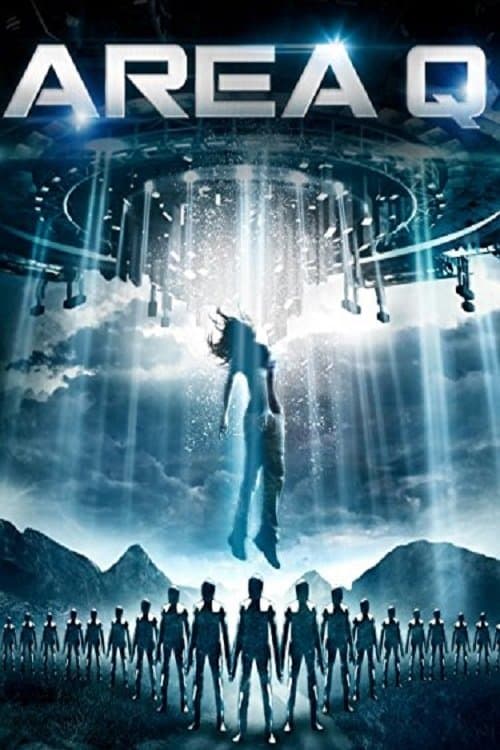
Area Q. (2012): Ending Explained
"Close encounter sightings"
A year after the disappearance of his son, Thomas Mathews, an investigative journalist, still has no information and begins his own obsessive search. However, the obsession has him losing his house and job so his boss sends him on special assignment in Brazil. In Brazil, Mathews investigates close encounter sightings that have taken place in the small cities of Quixada and Quixeramobim-also known as Area Q. While there, he realizes he will face the biggest discovery of his life.
9 min read
Release Year: 2012
Rating: 4.8/10
Runtime: 100 minutes
By Luna Sterling
Area Q. (2012): Ending Explained
As Luna Sterling, I've always been drawn to films that blur the line between personal grief and cosmic horror, where the vast unknown mirrors the voids in our own psyches. Area Q. (2012), a tense found-footage thriller directed by Gerson Sancho, plunges us into that murky territory. With its dusty Brazilian backroads and flickering shadows of the unexplained, the movie builds an atmosphere thick with dread—like the humid air before a storm that never breaks. In this ending explained, we'll dissect the film's haunting finale, unpacking its literal events, symbolic depths, and lingering questions. If you've been searching for clarity on Thomas Mathews' obsessive quest, read on; this low-budget gem rewards patient viewers with a payoff that's as psychologically visceral as it is enigmatic.
Quick Recap
Thomas Mathews, a once-respected investigative journalist from the U.S., is shattered by the mysterious disappearance of his young son a year earlier. No leads, no closure—just an aching void that consumes him. His relentless search spirals into obsession, costing him his home, his job, and any semblance of normalcy. Desperate to rein him in, his editor exiles him to Brazil on a "special assignment," ostensibly to cover reports of close encounters in the remote towns of Quixada and Quixeramobim—locals whisper of this parched region as "Area Q," a hotspot for UFO sightings and inexplicable vanishings.
As Mathews arrives in the sun-baked expanse, the air heavy with the scent of dry earth and distant rain, he dives into eyewitness accounts and grainy footage of lights streaking across the night sky. The locals' tales carry a palpable unease: farmers describing humming vibrations that rattle bones, children vanishing into thin air, and a collective hush that falls like fog over the community. Mathews' investigation uncovers eerie parallels to his son's case—patterns of abductions, whispers of otherworldly visitors. His skepticism frays as he interviews a reclusive witness who claims to have seen "them" up close, their forms shimmering like heat haze on the horizon. Tension mounts with each dusty road he travels, each flickering video he pores over in dimly lit motels, the psychological toll etching deeper lines into his weary face. By the midpoint, Mathews is no longer just chasing stories; he's clawing at the edges of reality itself, convinced Area Q holds the key to his personal nightmare.
The film's found-footage style amplifies the intimacy of his unraveling—shaky camcorder shots capturing the relentless buzz of cicadas at dusk, the metallic tang of fear in his ragged breaths. As Mathews pushes deeper into the forbidden zones of Area Q, forbidden not by law but by an unspoken dread, he stumbles upon classified documents hinting at government cover-ups and a web of international disappearances. The stage is set for a confrontation that blurs the line between journalist and haunted father, pulling him toward the "biggest discovery of his life."
What Happens in the Ending
The finale unfolds in a crescendo of suffocating tension, centered on a desolate ranch on the outskirts of Quixeramobim, where the horizon stretches endlessly under a bruised twilight sky. Mathews, flashlight trembling in his grip, follows a tip from his most credible source—a weathered farmer whose eyes dart like cornered prey. The air grows thick, almost electric, with a low-frequency hum that vibrates through the ground, making the pebbles skitter like fleeing insects. He sets up his camera on a tripod, the lens capturing the vast, star-pricked darkness that feels alive, watching back.
As night deepens, strange lights pulse in the distance—erratic orbs that dance like fireflies on steroids, casting elongated shadows that twist unnaturally across the cracked earth. Mathews whispers frantic notes into his recorder, his voice hoarse against the rising wind that carries a faint, ozone-sharp scent. Suddenly, the hum intensifies into a deafening roar, and a massive, disc-shaped craft materializes from the void, its underbelly glowing with an otherworldly blue that seeps into the soil like ink. Mathews approaches, heart pounding audibly through the footage, drawn by fragmented radio chatter he's intercepted earlier—coordinates matching his son's last known location.
In a pivotal sequence, he breaches an abandoned silo on the property, its rusted door groaning open to reveal a hidden chamber pulsing with bioluminescent veins along the walls. Inside, amid humming consoles and flickering holograms, Mathews discovers irrefutable evidence: grainy video logs of abductions, including one chilling clip showing his son being lifted into the sky by ethereal figures, their forms elongated and featureless against the night. Overwhelmed, he triggers an alarm, and the craft outside responds—beams of light sweep the ground, pulling at him with invisible force. In a visceral struggle, Mathews resists, clawing at the dirt as the pull intensifies, his screams echoing in the confined space. The footage cuts erratically as he's dragged upward, the camera capturing glimpses of the interior: sterile corridors lined with pods, faint cries from within.
The screen fades to static, then resolves into a final, shaky shot from inside the craft—Mathews, disoriented, face pressed against a translucent panel, staring out at the receding Earth. His last words, gasped amid labored breaths: "This is it... the truth." The film ends abruptly on black, accompanied by a lingering hum that fades into silence, leaving viewers with the cold weight of unresolved ascent.
The Meaning Behind the Ending
At its core, the ending of Area Q. symbolizes the ultimate surrender to the unknown, where personal loss intersects with universal mystery in a way that's both intimate and terrifying. The craft's arrival isn't just a spectacle; it's a metaphor for the inescapable pull of grief, manifesting as an alien force that Thomas has been orbiting since his son's disappearance. The bioluminescent chamber, with its glowing veins snaking like exposed nerves, evokes the psychological scars of obsession—Mathews' discovery rips open his wounds, forcing him to confront that his search was always leading him toward abduction, not resolution. The ozone scent and vibrating earth ground this in sensory dread, underscoring how the "biggest discovery" is bittersweet: truth at the cost of entrapment.
Thematically, it probes the tension between skepticism and faith, with Mathews' arc mirroring humanity's fraught dance with the extraterrestrial. The lights in the sky, once dismissed as folklore, become harbingers of a larger invasion—or perhaps a selective harvest of the lost. This ending represents closure as illusion; by ascending, Mathews transcends his earthly torment but enters a new, eternal limbo, suggesting that some voids can only be filled by leaping into them. It's a visceral punch to the gut, leaving the air feeling thinner, as if we've been pulled along with him.
Character Arcs and Resolution
Thomas Mathews' journey is the film's throbbing heart, evolving from a broken professional to a man unmoored by his own desperation. His arc peaks in the finale, where the obsessive journalist fully merges with the grieving father. The evidence of his son's abduction provides a twisted resolution—not reunion, but confirmation that shatters his denial. As he's pulled into the craft, it's his ultimate act of agency: no longer passive victim, he chooses pursuit over paralysis, even if it dooms him. This conclusion humanizes him amid the spectacle; his final gaze at Earth, eyes wide with a mix of terror and awe, captures the psychological release of letting go, though at profound cost.
Supporting characters, like the farmer informant, serve as echoes of Mathews' fate—haunted survivors who warn but cannot save. Their arcs reinforce the theme of communal silence in Area Q, where locals bury their encounters under layers of fear, much like Mathews buried his pain. The ending resolves nothing neatly, instead amplifying the isolation: Mathews' "discovery" is personal, leaving the world oblivious, his voice lost to the static.
Alternate Interpretations
Area Q.'s abrupt cutoff invites ambiguity, fueling debates among viewers. One reading posits the entire finale as Mathews' hallucination—a psychological breakdown induced by exhaustion and the region's oppressive heat, where the "craft" is a mirage born from his fixation on his son. The shaky footage and sensory overload (the hum, the pull) could symbolize his mind fracturing, ending in a catatonic "ascent" to delusion rather than literal abduction.
Alternatively, it might be a government psy-op: the chamber's holograms and beams as staged tech to discredit investigators like Mathews, tying into the cover-up hints earlier. His "discovery" becomes ironic entrapment by human hands, subverting alien tropes for a conspiracy thriller. Or, in a more optimistic lens, the ending hints at transcendence—Mathews reuniting with his son in some interdimensional realm, the hum fading to peace. These layers keep the mood unsettled, mirroring the film's refusal to clarify the "truth."
Themes and Symbolism
The ending reinforces core themes of loss and the limits of human inquiry, subverting the found-footage genre's promise of revelation. Symbolically, Area Q itself is a metaphor for forbidden knowledge—the dusty, labyrinthine towns evoking a psychological maze where curiosity leads to consumption. The craft's blue glow symbolizes elusive hope, cold and piercing like grief's afterimage, while the abduction beam represents fate's inexorable tug, pulling the isolated toward connection, however monstrous.
Broader motifs of colonialism linger subtly: an American outsider invading Brazilian "exoticism" only to be claimed by it, flipping the gaze. The film subverts alien invasion clichés by internalizing the horror—it's not world-ending, but soul-shattering, emphasizing how the unknown preys on personal vulnerabilities. Tension builds through psychological isolation, with the ending's silence underscoring humanity's smallness against the cosmos.
Final Thoughts
Area Q.'s ending is a masterstroke of restraint in a genre often bloated with exposition, delivering a visceral, mood-soaked climax that lingers like a half-remembered nightmare. It works brilliantly by embracing ambiguity, turning Mathews' discovery into a mirror for our own fears of the unexplained—grief's endless night sky. For general audiences, it's accessible yet provocative, rewarding rewatches with its atmospheric depth. If it falters, it's in the found-footage trope's occasional shakiness, but the psychological payoff elevates it. Ultimately, this finale reminds us: some truths drag you under, and in that pull lies the film's haunting power. If you're chasing closure on alien mysteries or personal demons, Area Q. delivers a discovery that hits viscerally home.