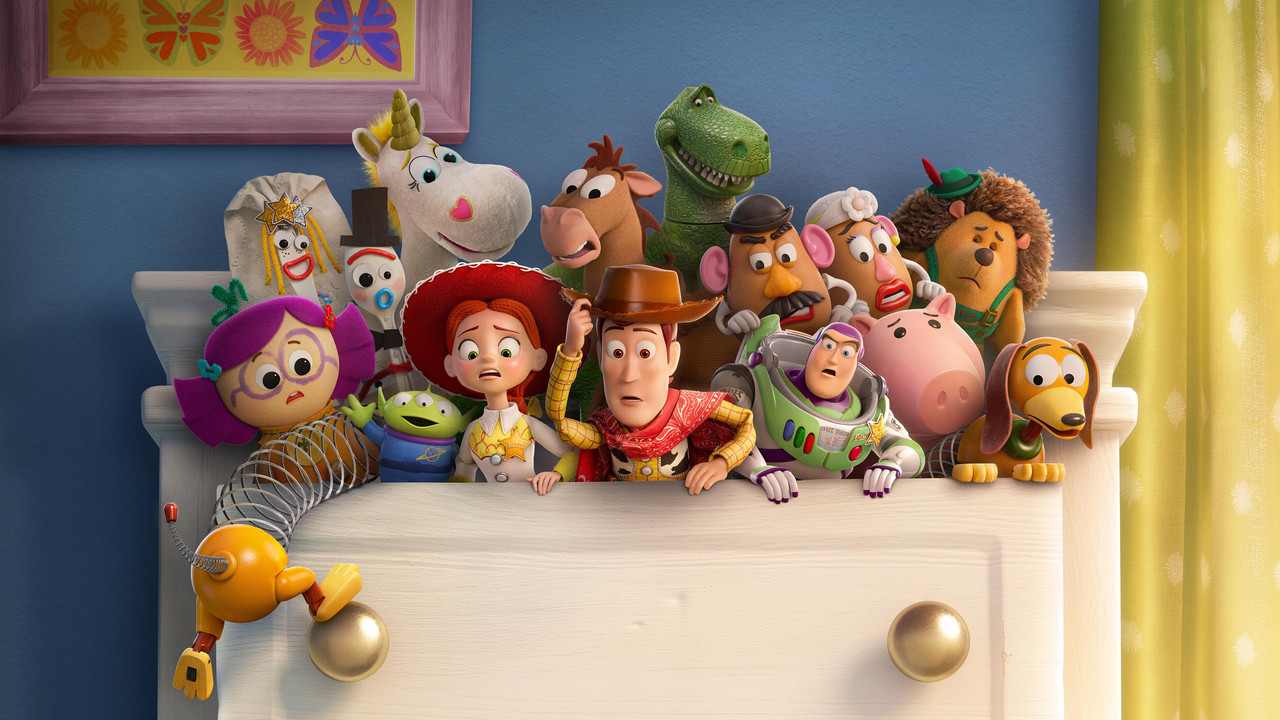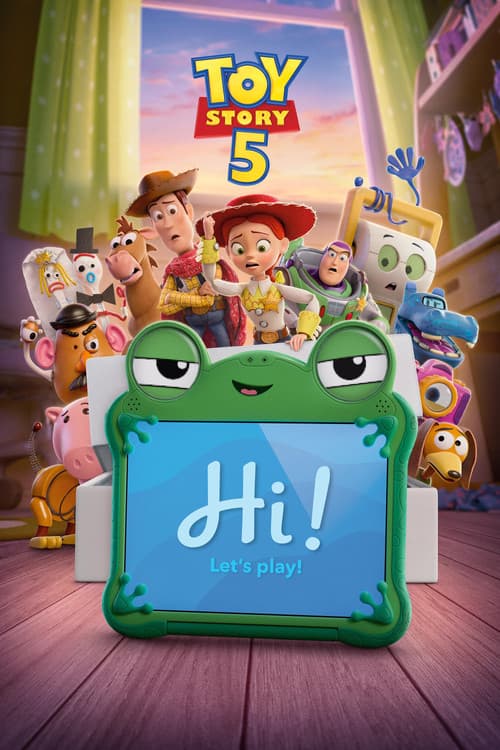
Toy Story 5 (2026): Ending Explained
Jessie's time capsule proves a toy doesn't need to hold a child forever, because the child carries the toy forward. Toy Story 5's ending, explained.
7 min read
Release Year: 2026
Rating: 8.3/10
Runtime: 102 minutes
By Ending Explained Team
The short answer
The short answer
The time capsule is the whole movie in one box. Jessie digs it up by the tree where Emily used to play with her, and inside are late-20th-century objects and photos of an adult Emily with her daughter, who is named Jessie. That's the answer the film has been withholding: a toy doesn't need to hold a child forever, because the child carries the toy forward in ways the toy never gets to see. Jessie's crisis was never really about Bonnie. It was about whether the years she spent with Emily meant anything once Emily stopped playing with her. The capsule says yes. Everything after it, the truck chase, the kiss, the pretend wedding, Woody leaving, the Buzz units finding new kids at a playground, is the film spending that answer.
Three appearances, tracked
The first appearance is the setup the film plants early and trusts you to forget: an old address written under Jessie's chaps. That's how the elderly couple knows where to take her after they find her and Bullseye. Jessie's past is literally stitched into her body, legible to strangers but not something she thinks about. At this point the motif is a plot device. It gets her to the farmhouse.
The turn is the discovery itself. Jessie sulks by the tree where Emily used to play with her, and she finds the buried time capsule: late-20th-century objects, photos of a grown Emily, and a daughter named Jessie. Watch what changes. The address under her chaps was a fact about her past. This is proof that the past kept going without her. Emily grew up, had a kid, and named that kid after the toy she left in a shed. The motif stops being about where Jessie came from and becomes about what she left behind.
The ending is the payoff. Jessie regains her faith in Bonnie. That's the sentence, and it's doing real work. She doesn't regain her faith because Bonnie came back for her. She regains it because she finally understands that being outgrown isn't the same as being forgotten. Bonnie's eventual drift away from toys, the thing the whole movie has been dreading, is no longer a failure state. It's just the next version of Emily.
Where the motif breaks
Here's where the film stops using the capsule the way you'd expect. The obvious move would be for Jessie to show it to someone, or to carry a piece of it back, or to have Bonnie see it and understand what toys mean. None of that happens. The capsule stays in the ground. Jessie digs it up, understands something, and that's it.
That break is the point. The film refuses to turn Jessie's private revelation into a lesson for Bonnie, because Bonnie isn't the audience for it. Bonnie is eight. She's on her tablet. She'll get it when she's Emily's age, if she gets it at all, and that's fine. The capsule teaches Jessie something she can only learn alone, which is the loneliest and truest thing in the movie. You don't get to be present for the proof that you mattered. You get the proof later, in a box, if you're lucky, and only if you go looking.
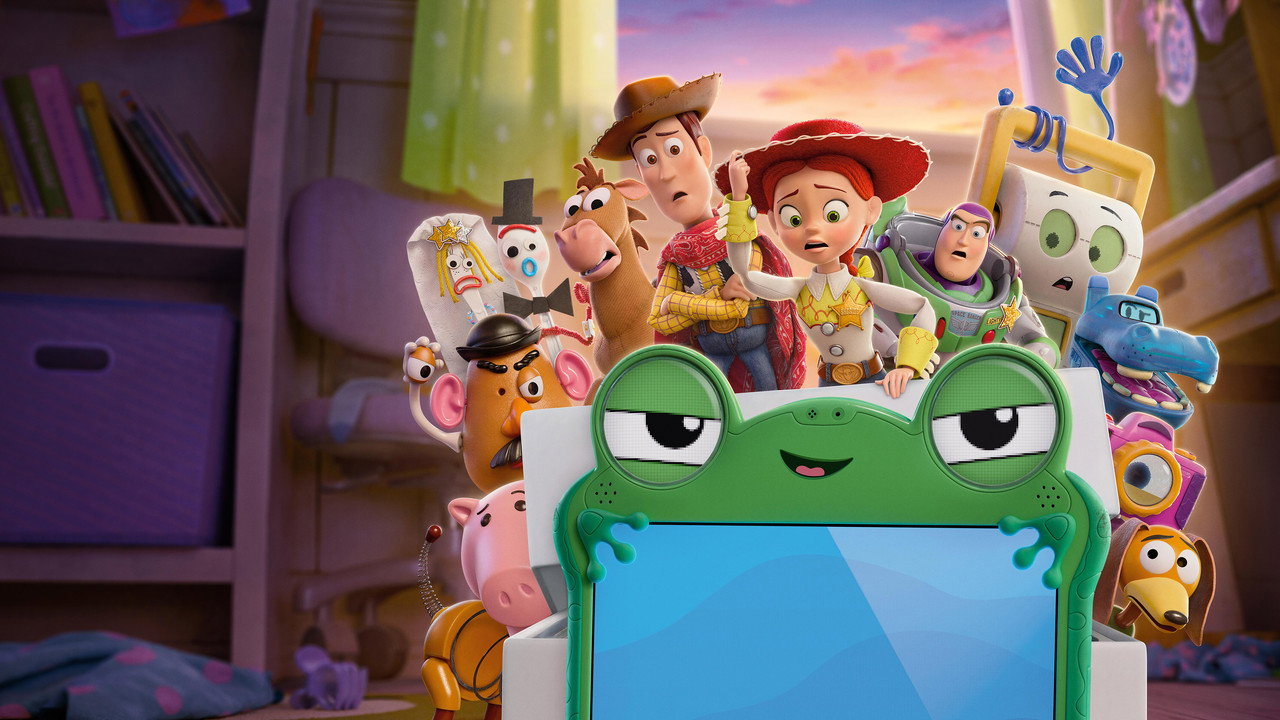
It also quietly reframes the Lilypad problem. Lily spends the whole movie trying to engineer Bonnie's social life through a screen, sending friend requests, tricking Bonnie's father into putting the toys in storage, believing the toys are the obstacle. The capsule is the counterargument. The thing that actually reached across decades wasn't a notification. It was a toy and a kid and a name. The film doesn't say screens are evil. It says they're bad at this specific job.
What it adds up to
What you saw the first time
Jessie is a toy losing her kid to a tablet. She stows away in a suitcase, gets sent home, gets found by strangers, ends up in a shed of forgotten toys, meets the device toys, has a nice playtime with Blaze, and tries to engineer a friendship. Then Bonnie rejects it because Chelsea, Heidi, and Kara make fun of her. Jessie sulks. It reads like a low point in a busy plot.
What you see once it's over
Jessie was never losing to Lily. She was being asked to accept the full arc of what a toy is: loved, outgrown, stored, remembered. The capsule confirms the remembering part, which is what makes the rejection survivable. Every earlier beat, the shed, Smarty Pants, Atlas and Snappy, is the film showing her the other forgotten toys so the capsule can mean something when it arrives. She isn't rescued from despair. She's given evidence.
The timescale is the thing that reorganizes on a second look. Everything in the movie happens over what feels like days. The capsule covers decades. Bonnie's cruelty on the group chat, which feels enormous in the moment, gets measured against Emily's entire adult life and shrinks to nothing. The film isn't saying Bonnie's feelings don't matter. It's saying they're a moment in a much longer line, and Jessie is the only character who can see the whole line.
The other thread
The Buzz units are the film's second answer, and they're easy to miss because they're played for comedy: a shipping container of demo-mode Buzz Lightyears following the North Star to "Star Command," mistaking Jessie's sheriff badge for command authority, capturing Woody because they think he means her harm. They're a gag about brand saturation. Then the ending hands each of them to a different child at a school playground.
That's the ending settling something the capsule can't. The capsule is about memory, about the past persisting. The Buzz units are about the future, and about how a toy's purpose doesn't have to be singular. One Buzz is Buzz. A hundred Buzzes are a hundred kids who each get one. The film takes its most cynical element, the mass-produced, interchangeable, demo-mode toy, and gives it the same ending it gives its hero: someone to belong to. Jessie gets proof she mattered. The Buzz units get the chance to matter at all. Same idea, opposite direction, and it's the reason the playground beat lands after the wedding instead of feeling like an afterthought.
Proving that old toys can learn new tricks while reckoning with an era of endless screen time, Toy Story 5 largely sidesteps franchise fatigue by reaffirming that children everywhere still got a friend in these lovable characters.
The verdict
The verdict
The critical split on this movie is real and it maps onto exactly this ending. Odie Henderson is right that the film "wrings new life out of its lore by making this installment Jessie's journey," and Clint Gage is right that it pulls off "an adventurous and resonant conclusion." David Ehrlich's complaint that it's "often scattered to a degree that leaves even its central plot somewhat undercooked" is the fair hit. The movie spends a lot of time on the Buzz units and the device toys, and some of it is noise. Peter Bradshaw's "needs new batteries" is the take I can't get behind, because it mistakes a busy movie for a tired one.
The capsule earns the ending. A toy that learns it was remembered, by a woman who named her daughter after it, walks into the rest of her life differently, and that's the whole film: not whether Bonnie keeps playing with Jessie, but whether Jessie can survive it if she doesn't. She can. Buzz tells her he loves her, the kids marry them off in a game, Woody watches and leaves with Bo, and the Buzz units fan out across a playground to start over with kids who haven't met them yet. Stanton and Kenna Harris made a movie about the difference between being outgrown and being forgotten, and they got the difference right. It's a better ending than the premise deserved, and it's Jessie's, which is what the series owed her.