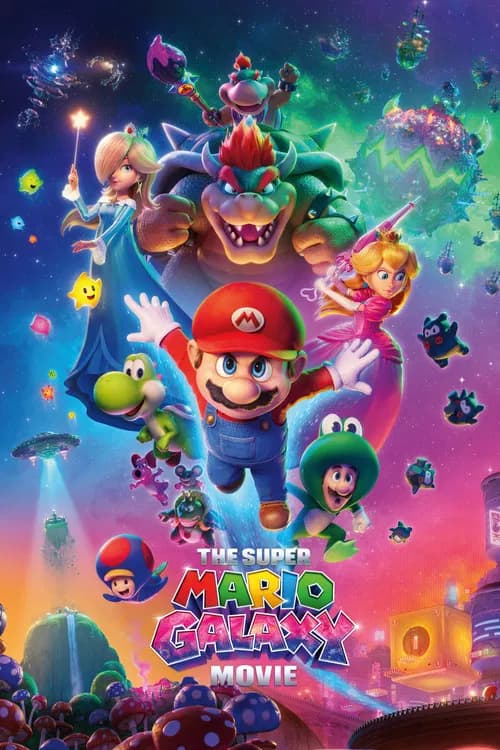
The Super Mario Galaxy Movie (2026): Ending Explained
Peach revives Rosalina, the sisters terraform Planet Bowser, and Bowser is jailed by Fox McCloud, but the film erases feeling with spectacle.
9 min read
Release Year: 2026
Rating: 8.2/10
Runtime: 98 minutes
By Ending Explained Team
The short answer
The short answer
The film ends by solving every problem it raised with a gesture rather than a reckoning: Peach revives a dying Rosalina, the two sisters terraform Planet Bowser into a new world, and the whole company goes home to rebuild Peach's castle, where Peach kisses Mario. Bowser gets dunked in lava, comes back as a skeleton, and is jailed by Fox McCloud. That's not resolution. It's erasure. The movie stages the emotional debts of its own subplots, then pays them off in spectacle so nobody has to sit with what they cost.
What is not in dispute
Fox McCloud, Toad, and the Lumas pilot the Comet Observatory and drop Mario, Luigi, Peach, and Yoshi onto the newly-made Planet Bowser. Mario and Peach confront a vengeful Bowser on a bridge, and Bowser uses the moment to air his grudge over the humiliating defeat that opened the film. Mario dunks him into the lava moat. Bowser doesn't die. He climbs back out in skeletal form. Luigi and Yoshi help Mario finish the Bowsers off with power-ups, and when one of Bowser Jr.'s own creations turns on him, Mario destroys it to save the boy's life. Meanwhile Rosalina is dying, and Peach revives her. The sisters join hands, summon the power of the cosmos, and terraform Planet Bowser into a new world.
Then everyone goes back to the Mushroom Kingdom. Mario, Luigi, and Yoshi help the sisters, the Toads, and the Lumas rebuild Peach's castle. Peach kisses Mario. Fox sends the Bowsers to jail and heads home to his universe. In a coda at the Gateway Galaxy, Princess Daisy stops Ukiki from pulling another robbery.
Every reading of the ending has to start from that floor. The disagreement is about what it means.
Reading one
The ending is a genuine emotional payoff: the film's two strongest throughlines, the Bowser father-son story and the Peach-Rosalina sisterhood, both land, and the terraforming is their earned culmination.
Start with the sisters. Peach has spent the film discovering she isn't who she thought she was. She learns she has the same powers as Rosalina, her long-lost older sister. She learns they were both made from stardust, and that Rosalina sent an infant Peach to the Mushroom Kingdom to protect her from the evil forces. That's not a throwaway reveal. It reframes Peach's whole history as an act of love by a sibling she didn't know she had. And the ending pays it off twice: first when Peach revives a dying Rosalina, which is the rescue reversed, the protected child saving the protector; then when the two of them touch hands and terraform a dead planet into a living one. The power only works when they're together. A film that wanted to discard the sisterhood wouldn't build its climax on the two of them holding hands.
Now the Bowsers. The father-son story is the movie's spine. Bowser Jr. spends the whole film trying to steal Rosalina's powers to fuel a universe-destroying cannon in his father's honor. Bowser, for his part, actually "feels" bad about double-crossing the brothers at one point, then goes back to villainy anyway, explicitly to mend his relationship with his son. That's a real conflict. And the ending complicates it rather than flattening it. When one of Junior's own creations turns against him, it's Mario who destroys it to save the boy's life. The villain's son is saved by the hero. That's not a defeated-enemy beat. That's a mercy beat, and it's the last thing the film shows us about the Bowsers before Fox jails them.
Under this reading, the terraforming is the thesis: a dead planet made alive by two women who were made from stardust, in a film where a father and son get one last chance because the hero chose to save the kid. The kiss is the bow on top.
Reading two
The ending is a magic trick. It resolves every thread by spectacle, and the emotional debts the film spent 90 minutes building are never paid.
Look at what the climax actually asks the audience to feel. Bowser gets dunked in lava and comes back as a skeleton. That's a cartoon gag, not a death. There's no weight to it. Then he's defeated with power-ups, which is to say he's defeated by the same mechanic the film has been using since the first act. Then Fox jails him. Bowser's grudge, the thing he "openly reveals" on the bridge, gets no answer. He doesn't reckon with anything. He gets dunked, skeletonized, powered-down, and jailed, and the film moves on.
Rosalina is dying. Why? The film doesn't build toward it. She's taken by Bowser Jr. early, and then she's a rescue object until suddenly she's at death's door so Peach can revive her. The revival is the payoff to a relationship the film barely dramatized. Peach learns she has a sister, and then within the same stretch of runtime she saves her life. The reveal and the rescue are jammed together, so neither lands.
And the terraforming. Planet Bowser becomes a new world. What was Planet Bowser? It was "newly-made," which means the film built a planet specifically so it could be transformed. There's no loss in the transformation. Bowser's stronghold isn't destroyed, it's redeemed. Nobody has to grieve anything.
Then the rebuild. Mario, Luigi, and Yoshi help the sisters, the Toads, and the Lumas rebuild Peach's castle. That's restoration, not consequence. The castle was lifted into space and dropped into the Honeyhive Galaxy. Now it's rebuilt. Nothing is gone.
And the kiss. Peach kisses Mario, "much to his delight." That's the emotional resolution the film chooses to end on. Not the sisters. Not the Bowsers. A kiss between the two leads, played for delight, after a movie that spent most of its runtime on a rescue mission and a father-son subplot. The kiss isn't wrong, exactly. It's just small. It's the smallest possible ending the film could have chosen, and it arrives after a climax about terraforming a planet.
The abrupt conclusion feels like an abandonment. At least it's short.
What the evidence actually favours
Reading two. But not by as much as you'd think, and the reason matters.
The film genuinely does build the Peach-Rosalina sisterhood as its emotional center, and the terraforming is a real payoff to that thread. Peach revives Rosalina. They touch hands. They make a world. That's coherent. If the movie were only about the sisters, the ending would work.
But the movie isn't only about the sisters. It's also about the Bowsers, and that thread gets a mercy beat (Mario saving Junior) followed by a jail sentence, which is a strange one-two. And it's also about Mario and Peach, and that thread gets a kiss that the film treats as a punchline. And it's also about Yoshi, who hatched in Brooklyn, broke a dinosaur skeleton in a museum, got chased back to his home world, and ends the film helping rebuild a castle. That's not a payoff. That's a cameo with a job.
The ending supports both readings because the film has too many threads to resolve any of them fully. The sisters land. The Bowsers half-land. Everything else gets a group shot.
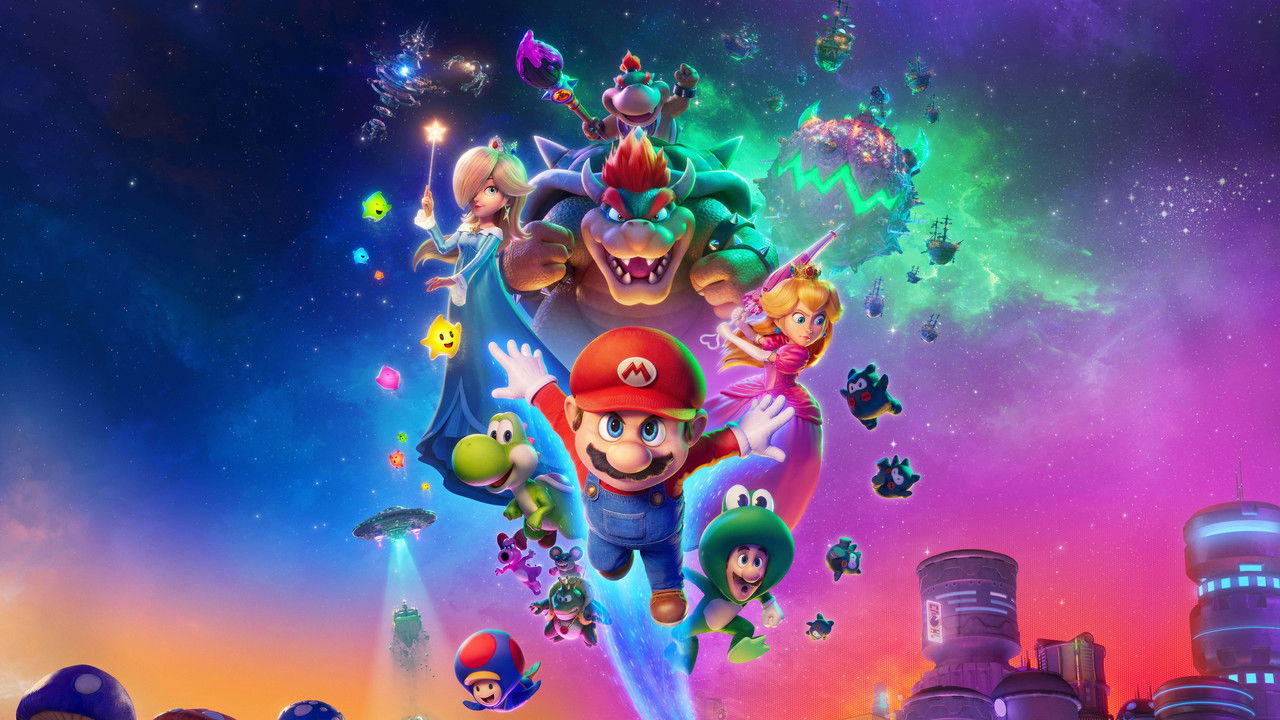
What tips it toward reading two is the sequencing. The film puts its biggest emotional beat (the terraforming) before its final emotional beat (the kiss), and the kiss is smaller. A film that believed in the sisterhood would end on the sisters. This one ends on Mario getting kissed. That's a choice, and it tells you what the filmmakers thought the audience came for.
What critics made of it
The critical response splits along the same fault line.
Glenn Garner at Deadline Hollywood read the ending generously: "The Super Mario Galaxy Movie is a fun sequel full of nostalgic references, all-star voices and epic animation, grounded by the father-son story of redemption for Bowser (Jack Black) and a sisterly origin story Princess Peach, both of which pave the way for more video game adaptation fun." Garner sees the two threads as the film's grounding, which is reading one.
Tara Brady at The Irish Times read it as abandonment: "the dynamic between Bowser and his son, and the Frozen-like sisterhood between Peach and Rosalina, are jettisoned as quickly as they are introduced. Subplots remain half-formed. New additions, especially Glen Powell's inexplicably underused Fox McCloud, barely register. The abrupt conclusion feels like an abandonment. At least it's short." That's reading two, stated bluntly.
Alissa Wilkinson at The New York Times went further: "There's a flat empty nothingness to The Super Mario Galaxy Movie, even more than its flat empty predecessor." Clint Gage at IGN landed in between: "a dazzling, reference-stuffed sequel whose wall-to-wall Easter eggs, epic action set pieces, and affectionate design work keep fans grinning even as the crowded plot and lack of a single emotional throughline prevent it from reaching the heights of its predecessor." Gage names the problem exactly. There's no single emotional throughline, which is why the ending has to resolve four of them at once and can only really land one.
The Rotten Tomatoes consensus splits the difference too: "Packed with colorful world-building that's as frenetic as it is weightless, The Super Mario Galaxy Movie's visuals are often out of this world but the threadbare story ultimately loses its Milky Way."
The verdict
The verdict
The ending is a magic trick, and the trick works on you if you let it. Peach and Rosalina terraforming a dead planet into a living one is a real image, and it's the one moment where the film's cosmic scale matches its emotional scale. But everything around it is sleight of hand. Bowser comes back as a skeleton so he doesn't have to die. Rosalina starts dying so Peach has something to fix. Planet Bowser exists so it can be redeemed. And the film ends on a kiss, which is the smallest possible answer to the question of what all this was for.
The sisterhood earns its ending. The movie doesn't earn the rest of it. And since the movie insists on ending with Mario and Peach rather than the sisters, the last thing it tells you is that it doesn't quite trust its own best idea.