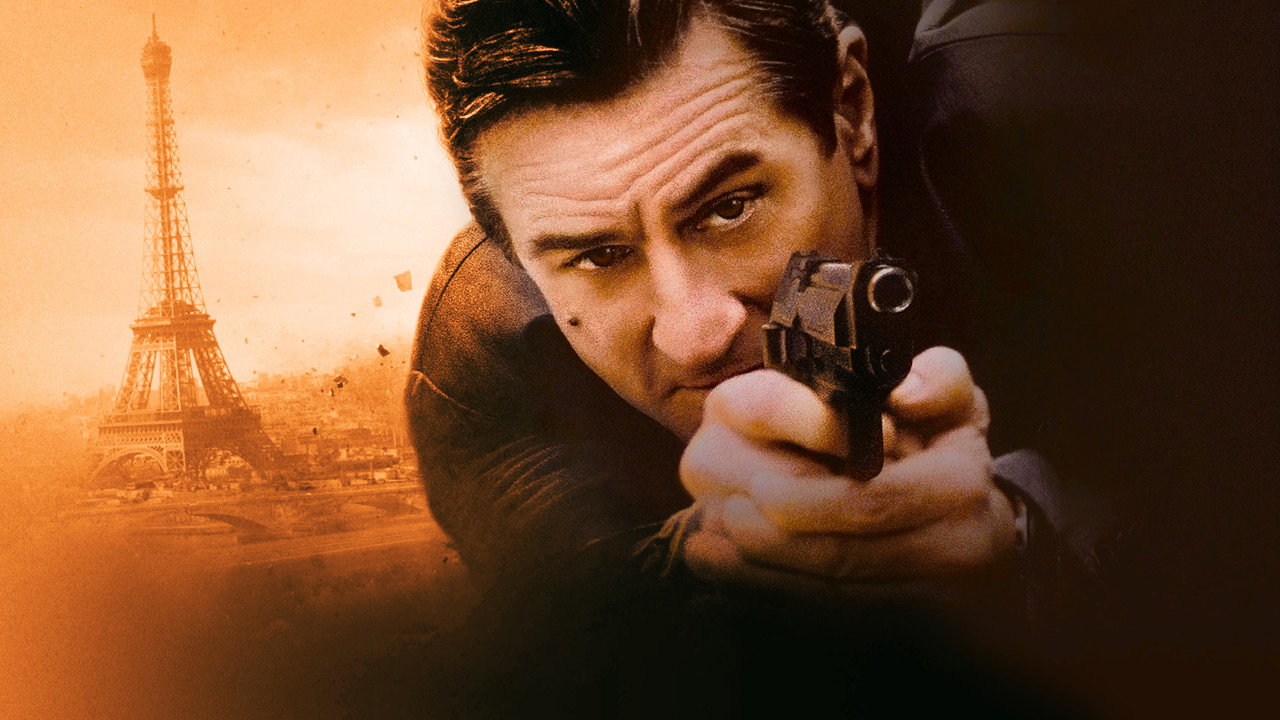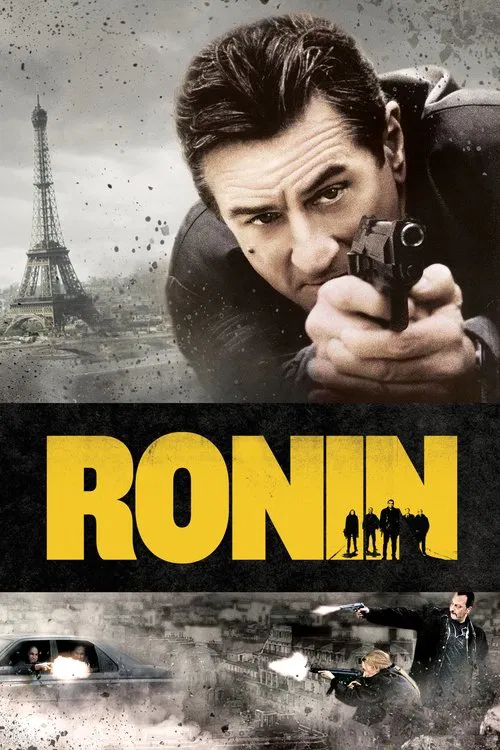
Ronin (1998): Ending Explained
Vincent kills Seamus, Deirdre drives away, Sam says he doesn't remember what was in the case, and the radio reports a peace deal.
8 min read
Release Year: 1998
Rating: 7/10
Runtime: 122 minutes
By Ending Explained Team
The short answer
The short answer
Seamus O'Rourke dies, killed by Vincent during the final chase back into the arena, after Seamus ambushes Sam. By then Seamus has already killed Larry and escaped with a reluctant Deirdre and the captured Gregor. The case keeps changing hands: Gregor is interrogated in Paris and made to return it, Mikhi kills Gregor and takes it at Le Zénith, Seamus kills Mikhi and steals it back. Sam tells Deirdre he is still CIA and is after Seamus, not the case, and she drives away. Sam and Vincent meet again at the Montmartre bistro where they first met, hear a radio broadcast that a Sinn Féin-British peace agreement has been reached partly because of Seamus's murder, shake hands, and part. Vincent asks what was in the case. Sam says he does not remember, then drives off with his CIA contact.
Three appearances, tracked
Deirdre's briefing
Deirdre briefs the team on the convoy job and names the object: a large metallic briefcase. She never says what is inside it. Sam photographs it at a posh hotel with Deirdre, which is the closest the film comes to treating the case as something you can look at, study, and know. The audience assumes the contents matter because the film is built like a heist.
Gregor's decoy
Gregor steals the case and swaps in explosives. The decoy, we later learn, is a case for carrying ice skates. That is the turn. The object everyone is bleeding over has been replaced by a piece of sporting luggage, and the film has quietly told you the real case is not the point. Gregor then has to give it back under interrogation, which means the thing that launched the whole operation is now a parcel someone retrieves from a post office.
Vincent's question
At Le Zénith, Mikhi kills Gregor and takes the case. Seamus kills Mikhi and takes it. The film never reveals what's inside. In the final scene Vincent asks Sam what was in it, and Sam says he does not remember. The object that organized every set piece ends the film as a thing two men agree to stop thinking about.
Where the motif breaks
The break is not that the case is never opened. Plenty of films withhold the MacGuffin. The break is that the film hands the case to the wrong man and then refuses to care. Seamus is the last person shown taking it, and the film doesn't settle where the case ends up. Seamus is not the villain of the piece in any clean sense. He is Deirdre's handler, an Irish operative whose death the radio later credits as a partial cause of a peace agreement between Sinn Féin and the British government. So the prize does not go to Sam, who has been the film's center, or to Vincent, who does the actual killing. It goes to a man whose murder turns out to be the politically useful event.
That is where the film stops using the briefcase as a heist engine and starts using it as a decoy in a different sense: a decoy for the audience's attention. While you were tracking the case, the film was tracking Seamus. Sam says as much to Deirdre in the getaway car. He is still in the CIA, and he is after Seamus, not the case. I'd read the mission briefing as the cover story, aimed as much at us as at the team.
What I like is, it's a character-driven action picture, and I have done those before, with Black Sunday and French Connection II. It's not one of these CGI pictures, it's a film about people. It's not bigger than life, which I don't relate to that much.
Frankenheimer told Variety he chose it because it was "a character-driven action picture", and that explains why the case can be dropped without the film collapsing. An object-driven picture needs the object to pay off. A character-driven one does not, and Ronin spends its last minutes proving which kind it is.
What it adds up to
First time through
You watch a heist film where the team is assembled, the convoy is hit, the case is stolen and re-stolen, and the question of what is inside builds pressure toward a reveal. Seamus reads as the antagonist who keeps escaping with the goods. Deirdre reads as a woman caught between her handler and the crew she was hired to run. The final bistro scene reads as an anticlimax, because the object everyone wanted is dismissed in a single line and the film ends on coffee.
You watch a film about a man with no master. Sam is not running an operation for the agency in any straightforward way. He is using a mercenary job as cover to reach Seamus. I'd read the job as his way in; the case was never his object. Seamus's death is not a private score settled; the radio tells you it fed a peace process. Deirdre was never going to come back to the bistro, because Sam used her the way he used the job. And Sam's line about not remembering is not a joke about a MacGuffin. It is the character closing a file.
Now that you know
Jean-Pierre compares Sam's situation to the tale of the 47 Ronin while Sam recuperates at the villa, and the title points that comparison straight at Sam. Sam is a CIA man operating without a visible chain of command, working alongside Vincent, a Frenchman with no stated employer, against Seamus, who has an organization and a cause. The title is not decoration. It is a description of the two men left at the table.
The other thread
The film also settles Deirdre, and it settles her coldly. She is in the getaway car when Sam finds her, and he talks her into leaving. What he tells her is that he is still CIA and that he is after Seamus, not the case. That is not a confession. I'd read it as an operational disclosure, the one thing he can say that sends her away, and she takes it and drives. She does not appear again.
The bistro ending handles her absence with real care. Sam keeps glancing at the door as patrons come in. Vincent has to convince him she will not be coming back. So the film lets Sam have the small human hope and then takes it from him, and it does it without a word from Deirdre. She is not dead. She is just gone, and the film treats that as the correct outcome of what Sam did. He got what he came for, and he's the one who sent Deirdre away.
The verdict
The verdict
Ronin ends with a handshake because that is the only relationship the film believes in. Sam and Vincent met as hired strangers in a Montmartre bistro, and after everything, the two of them are back at the bistro where they first met, and Vincent pays the bill. The case is forgotten, Deirdre is gone, Seamus is dead and turned into a line on a radio news bulletin. What survives is a working respect between two men who never had a cause in common.
I'd argue the film is making a claim about the mercenary life, and it is not a flattering one. Sam gets his target, and the cost is Larry dead, Deirdre driven off, Gregor gone. Vincent is still at the table, and when he asks, Sam says he can't remember what was in the case. I'd argue that's because what Sam was actually chasing was Seamus, and Seamus is finished. The briefcase was never the mission. It was the excuse. The film withholds its contents for two hours and then has Sam reply that he does not remember, and that flat answer is the whole point: the work is the work, the object is interchangeable, and the men who do it end up with coffee and a handshake and nothing else.
Stephen Prince, writing about the film, put it plainly: "Ronin is smart, sharp, and witty, and it shows a greater facility for visual storytelling than most films made today, by younger directors, can muster." That facility is doing the ending's work. The film never explains what Sam lost. It just shows you the door he keeps watching, and the partner who tells him to stop.