Reunion (2024): Ending Explained
"The past is a killer."
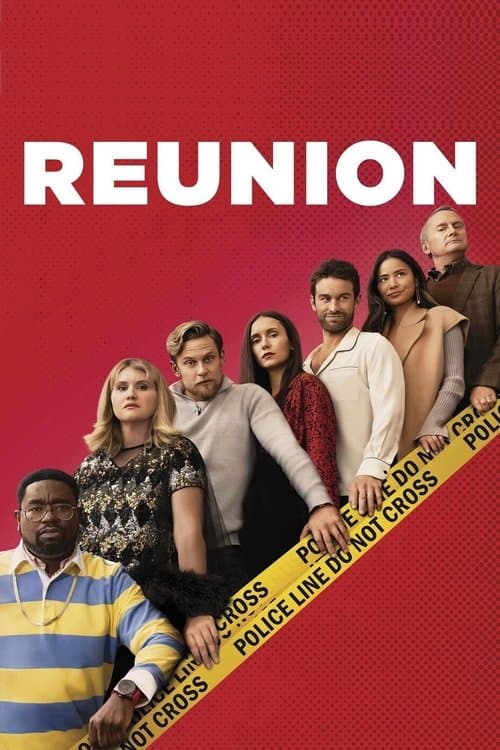
Centers on a murder that takes place at a high school reunion, unfolding during a snowstorm that leaves guests trapped in an isolated mansion.
9 min read
Release Year: 2024
Rating: 6.035/10
Runtime: 94 minutes
By Luna Sterling
Reunion (2024): Ending Explained
In the chilling confines of a snowbound mansion, Reunion (2024) transforms a nostalgic high school gathering into a claustrophobic nightmare of buried grudges and lethal secrets. As Luna Sterling, I've dissected countless films where the past claws its way into the present, but this one's atmospheric dread—punctuated by the relentless howl of a blizzard and the creak of shadowed halls—lingers like frost on the skin. Directed with a keen eye for psychological unraveling, the movie builds to an ending that shatters illusions of camaraderie, revealing how old wounds fester into something fatally cold. If you're searching for a Reunion ending breakdown, who really killed Mathew, or the twisted ties between the survivors, this guide peels back the layers without spoilers beyond the finale.
Quick Recap
The film opens on the twentieth anniversary reunion of Ridgeview High's Class of 2001, hosted in the opulent yet isolating mansion of hedge fund manager Mathew Danbury. Amid flickering lights and echoing laughter, familiar faces resurface: Evan West, a steadfast police officer; his loyal best friend Ray Hammond; ambitious journalist Jasmine Park; the eccentric Vivian Chase; rising politician Amanda Tanner; the once-glamorous Meagan Cooper; and their former teacher, Mr. Theodore Buckley. Initial vibes are laced with forced cheer—Evan and Jasmine spark a tentative romance over shared glances, while Ray's persistent flirtations with Meagan erupt into a heated public spat. Mathew, the evening's boisterous host, dances in the school's mascot costume, flirting shamelessly despite claims of marital bliss, until Vivian's raw speech exposes his high school cruelty, souring the mood like a sudden chill.
As a ferocious snowstorm descends, blanketing the world in white isolation, most guests flee, but the inebriated core group—Evan, Ray, Jasmine, Vivian, Amanda, and Buckley—stays trapped. Dawn breaks with horror: Jasmine discovers Mathew's lifeless body in his bedroom, a single gunshot wound piercing his chest. Phone lines severed by the storm, the mansion becomes a pressure cooker of suspicion. Revelations trickle out like melting ice—sexts from Mathew's phone implicating affairs, an open window amid the blizzard's fury, a hidden earring, and a bullet-riddled wardrobe door. Everyone harbors grudges from teenage torments, and as searches unearth clues like a blackmail VHS tape showing Amanda and Mathew poisoning a peer, paranoia thickens the air, heavy with the scent of fear-sweat and unspoken betrayals.
Tensions escalate through the night: Jasmine, driven by her quest to expose Mathew's fraudulent hedge fund, sneaks into his office and is pursued by a masked figure in the mascot costume, the fabric's muffled footsteps echoing like a predator's breath. Morning brings fresh atrocity—Meagan's body stuffed in a car trunk, footprints in the snow matching Ray's boots, pinning him as the jealous killer behind both murders. With lines restored, police arrive alongside Mathew's wife, Lisa, thrusting the group into a vortex of accusations that tests loyalties forged in youth and strained by adult deceptions.
What Happens in the Ending
The finale unfolds in a taut crescendo of revelations, the mansion's dim sitting room bathed in the pale light filtering through frost-laced windows, where the air hangs thick with the metallic tang of gun oil and rising dread. As police swarm the snow-dusted grounds, Ray—framed by circumstantial evidence like the boot prints and his argument with Meagan—is handcuffed and led away. But in a pulse-pounding twist, he wrests a firearm from an officer, herding the stunned group back into the sitting room at gunpoint. The room, once a hub of reunion revelry, now feels like a confessional under siege, shadows pooling in corners as Ray's voice cuts through the silence, piecing together the puzzle with the precision of a man fighting for his life.
Ray's deduction is methodical and visceral: Mathew was slain post-snowstorm by his wife, Lisa, who orchestrated the crime with chilling efficiency. She blackmailed Amanda—leveraging that damning VHS tape—to cut the power, creating chaos to mask her movements. Lisa flung open the bedroom window to mimic an intruder's entry, the icy gusts howling as misdirection. Donning the mascot costume during the party, she ensured Mathew's absence went unnoticed, his "dancing" a posthumous ruse. Meagan's death? Collateral— she had slipped into the bedroom and witnessed the shot, her screams stifled in the trunk Ray's boots were cleverly planted to implicate him. The sexts? Evan's doing, sent from Mathew's phone to sow discord, as the officer and Lisa's affair simmers beneath the surface.
Proof materializes in a gut-wrenching digital trail: intimate messages exchanged on a innocuous mobile gaming app, their coded flirtations exposed like veins under skin. The group's faces contort in betrayal's sting—Jasmine's eyes widening in the lamplight, Vivian's nervous fidgeting amplifying the room's stifled breaths. Police reclaim control, cuffing a defiant Evan and a pale Lisa as they are dragged into the storm's remnants, sirens wailing faintly against the wind. In the aftermath's awkward hush, Jasmine extends a job offer to the vindicated Ray, her voice a tentative bridge over the chasm of deceit. The survivors—Ray, Jasmine, Vivian, Amanda, and Buckley—pose for a stiff commemorative photo, flashes popping like fleeting sparks in the gloom, the mansion's walls seeming to exhale as the nightmare recedes.
The Meaning Behind the Ending
At its core, the ending of Reunion symbolizes the inexorable thaw of long-frozen secrets, where the snowstorm's isolating blanket forces the past's toxins to surface, poisoning the present. The mansion, a gilded cage of nostalgia, represents how success like Mathew's—built on high school predation and financial fraud—crumbles under scrutiny, his death a metaphorical bullet to the heart of unchecked privilege. Lisa and Evan's betrayal arc underscores the film's visceral exploration of intimacy as weapon; their gaming app messages, innocuous on the surface, evoke the psychological sleight-of-hand of modern deception, turning playful pixels into a noose of complicity.
Thematically, the resolution dissects reunion as reckoning: what begins as a warm gathering devolves into a confessional inferno, where motives from bullying (Vivian's speech) to embezzlement (Buckley's ruined savings) ignite like embers in dry tinder. Ray's gunpoint unveiling isn't just plot mechanics—it's a cathartic purge, the tension of his voice amid the room's heavy silence mirroring the psychological strain of dredging up adolescent scars. Ultimately, the ending affirms that survival demands confronting the rot within alliances, leaving a lingering chill that true reunion is impossible when trust erodes like melting snow.
Character Arcs and Resolution
Ray Hammond's journey from comic-relief sidekick to unlikely detective culminates in redemption, his impulsive loyalty to Evan tested and shattered, emerging with a scarred but sharpened resolve—Jasmine's job offer signaling a pivot from aimless advances to purposeful pursuit. Jasmine Park evolves from detached journalist to empathetic anchor, her romantic spark with Evan soured into wary insight, her expose on Mathew's fraud validated in the chaos, granting her closure on personal vendettas tied to the past.
Evan's arc inverts from reliable cop to treacherous lover, his betrayal a visceral gut-punch that resolves his internal conflict—torn between duty and desire—by exposing his moral decay, cuffs clicking like a final judgment. Lisa, the unseen puppet-master, resolves as the embodiment of vengeful domesticity, her arrest stripping away the facade of grieving widow. Supporting players like Vivian find quiet vindication, her "weirdo" isolation yielding to group solidarity; Amanda confronts her complicity in past sins, emerging humbled; and Buckley, defrauded and overlooked, witnesses justice for his quiet ruin. The photo op seals their arcs in uneasy truce, bonds reforged not in joy, but in shared survival's grim aftertaste.
Alternate Interpretations
While the ending appears airtight with the app messages as smoking gun, Reunion leaves subtle fissures for ambiguity, inviting viewers to question the reliability of Ray's reconstruction in the high-stakes frenzy. Could Ray, driven by self-preservation, have embellished details to deflect blame—perhaps planting the boot evidence himself in a desperate bid? The mascot chase on Jasmine feels too conveniently timed, hinting at a broader conspiracy where multiple hands (Amanda's blackmail lingering?) conspired, turning the reveal into a Rashomon-like mosaic of half-truths.
Another lens: the gaming app proof might symbolize digital unreliability, suggesting Evan and Lisa's guilt is inferred rather than ironclad—did Ray access it undetected, or is it a red herring amid the storm's disorientation? These cracks amplify the psychological unease, positing the "resolution" as provisional, much like the survivors' photo: a frozen moment masking deeper fractures in their psyches.
Themes and Symbolism
The ending reinforces Reunion's core themes of isolation's corrosive power and the past's inescapable grip, subverting the reunion trope from feel-good nostalgia to a pressure-tested autopsy of human frailty. The snowstorm symbolizes buried traumas—pristine yet suffocating, its melt revealing footprints of guilt like sins etched in white. The mascot costume, a bulky shroud of anonymity, embodies performative facades, worn to conceal murder as easily as high school cruelties.
Betrayal threads through as a psychological scalpel, dissecting how love twists into lethality (Evan and Lisa's affair) and jealousy festers (Ray's false framing). The VHS tape and sexts evoke memory's fragility, artifacts that weaponize the visceral shame of youth. Subversively, the film flips empowerment narratives: Vivian's speech, once dismissed, echoes in the collective unmasking, suggesting oddballs like her hold the emotional truth amid the popular crowd's polished lies. Overall, it's a meditation on how confined spaces—be they mansions or minds—amplify the monstrous within, leaving audiences with the chill that no storm truly clears the air.
Final Thoughts
Reunion's ending works masterfully as a pressure-valve release, channeling the film's building tension into a revelation that's as satisfying as it is unsettling, the sitting room standoff evoking the raw pulse of a heartbeat under threat. It avoids cheap twists by grounding shocks in character-driven motives, rewarding attentive viewers with a payoff that feels earned amid the atmospheric dread. Yet, its subtle ambiguities ensure replay value, prompting debates on trust's fragility long after the credits. For thriller fans craving psychological depth wrapped in wintry isolation, this finale cements Reunion as a standout—proof that sometimes, the deadliest reunion is with one's own shadows. If you've seen it, what lingered for you? Drop your takes below.