Lost (2004): Ending Explained
"Be careful which way you turn."
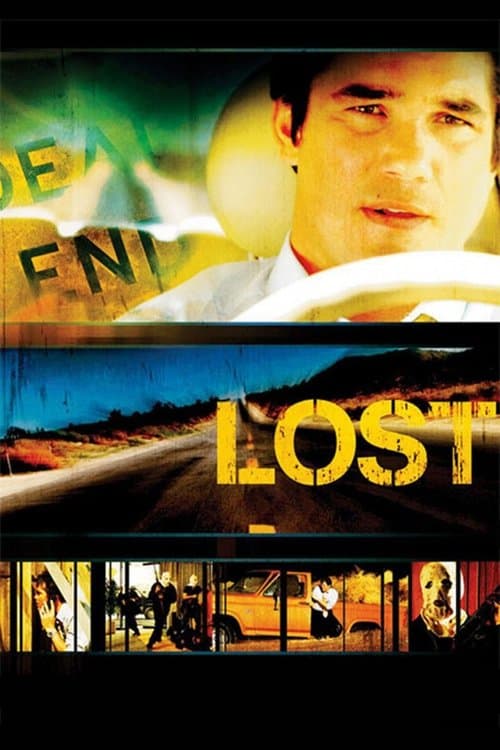
Trapped in a maze of endless desert highways, bound by a vital deadline, and pursued by an unseen menace.... Jeremy Stanton is about to take the longest ride of his life. He will learn that when you reach the crossroads of life... you must be careful which way you turn.
8 min read
Release Year: 2004
Rating: 5.4/10
Runtime: 90 minutes
By Luna Sterling
Lost (2004): Ending Explained
Quick Recap
In Lost (2004), Jeremy Stanton, a slick bank vice president played by Dean Cain, finds himself spiraling into a nightmare after pulling off what he believes is the perfect robbery. The film unfolds like a taut psychological thriller, with Jeremy racing through an endless expanse of sun-baked desert highways, bound by a merciless eight-hour deadline to reunite with his family. As the miles stretch on, the air thickens with isolation—the relentless hum of his car's engine underscoring his growing paranoia. He pops in audio tapes from a self-help guru, whose chapters structure the narrative, offering hollow mantras about life's crossroads that only amplify his unraveling mind.
What starts as a triumphant escape quickly curdles into dread. Jeremy double-crossed his accomplices, including a brutal killer embodied by Danny Trejo, who now stalks him like a shadow in the rearview mirror. Desperate for direction in this labyrinth of parched roads, Jeremy calls a telephone route-finding service, where the calm voice of Judy (Ashley Scott) becomes his lifeline—or so he thinks. Her instructions clash with his map, leading him deeper into the haze-shrouded void. Along the way, self-doubt gnaws at him like the desert wind; his wife's phone calls drip with suspicion about their shared deceptions, and a chance encounter with a state trooper ends in blood, the trooper's lifeless form a stark warning of the noose tightening around Jeremy's neck.
The film's Kafka-esque tension builds through Jeremy's near-solo ordeal, the vast emptiness outside mirroring the chaos within. Every wrong turn feels visceral—the grit of dust on his skin, the metallic tang of fear in his throat—as pursuers close in, and Judy's guidance begins to feel less like salvation and more like a siren's call.
What Happens in the Ending
The climax of Lost crescendos in a suffocating trap of betrayal and inevitability, leaving viewers breathless in the film's final moments. As Jeremy hurtles through the flickering twilight of the desert, the revelations hit like a sandstorm: Judy's soothing voice over the phone, which has guided him through countless detours, is unmasked as a ploy. She's been bought off by his vengeful accomplices, her directions deliberately steering him not toward freedom, but into an ambush. The air grows heavy with the scent of scorched rubber and impending doom as Jeremy realizes the web he's woven—his "perfect crime" now a noose of his own making.
In the last scenes, Jeremy's car skids to a halt amid a ring of shadowy figures emerging from the encroaching dusk, their silhouettes jagged against the dying light. The camera lingers on his face, sweat-slicked and wide-eyed, as the weight of isolation shatters. One of the pursuers—likely the ruthless killer he's betrayed—steps forward, the gravel crunching underfoot like bones grinding. With deliberate menace, the figure taps on the car window, the sound a sharp, echoing punctuation that reverberates through the confined space. The screen fades to black on that frozen instant, Jeremy's fate hanging in the charged silence, the desert's oppressive quiet swallowing any hope of escape.
No gunfire erupts, no heroic twist unfolds; instead, the ending traps us in the same claustrophobic tension that has defined Jeremy's journey, the tap on the glass a visceral reminder of vulnerability exposed.
The Meaning Behind the Ending
At its core, the ending of Lost symbolizes the inescapable consequences of moral detours, where every choice at life's crossroads leads not to enlightenment, but to entrapment. The desert highway serves as a metaphor for Jeremy's fractured psyche—a barren, looping maze where the guru's tapes promise self-actualization but deliver only ironic mockery. That final tap on the window isn't just a physical threat; it's the psychological breaking point, the moment when denial crumbles under the weight of reality. The unseen menace that has pursued him throughout manifests as the sum of his betrayals, underscoring the theme that isolation breeds not independence, but vulnerability to the shadows we cast ourselves.
Thematically, the ending reinforces a visceral exploration of guilt and self-deception. Jeremy's race against the clock mirrors the internal deadline of conscience, the eight hours ticking like a pulse in the throat. Judy's betrayal twists the knife, representing how trust, once poisoned by greed, curdles into complicity. It's a haunting commentary on the illusion of control: in the vast, indifferent desert, where mirages dance on the horizon, Jeremy's downfall illustrates that the real lost souls are those who chase shortcuts to redemption, only to find the path paved with their own lies.
Character Arcs and Resolution
Jeremy Stanton's arc is a descent into the abyss of his own ambition, transforming from a confident architect of crime to a haunted everyman ensnared by his hubris. His journey begins with calculated betrayal—double-crossing his partners for personal gain—but the desert's relentless grind erodes his facade, exposing the cracks of doubt and regret. By the ending, as the window tap seals his isolation, Jeremy achieves a grim resolution: not redemption, but reckoning. His self-doubt, seeded early through the guru's tapes and his wife's probing calls, culminates in raw exposure, forcing him to confront the man he's become. It's a visceral arc, the psychological tension coiling tighter until it snaps, leaving him stripped of illusions.
For Judy, her role as the voice of false guidance arcs from enigmatic helper to active antagonist, her calm demeanor a mask for calculated malice. Revealed as a paid informant, she embodies the film's undercurrent of corrupted connections, her betrayal resolving her arc as a cog in the machine of retribution. The other characters, like the pursuing killer and the slain trooper, serve as extensions of Jeremy's consequences—faceless forces that underscore his solitude. Ultimately, no one finds tidy closure; the ending resolves arcs through entrapment, the desert's mood amplifying the psychological toll of unchecked choices.
Alternate Interpretations
While the ending's abrupt cut to black invites ambiguity, it primarily signals doom—Jeremy cornered, his escape foiled. Yet, some viewers might interpret the tap on the window as a psychological hallucination, a manifestation of his paranoia rather than literal capture. In this reading, the desert's heat and isolation could have driven him to imagine the ambush, leaving open the possibility of a last-minute evasion, his car peeling away into the night. This ties into the guru's themes of perception versus reality, suggesting Jeremy's mind is the true pursuer.
Another lens views the ending as a metaphor for cyclical entrapment, where the "surrounding" figures represent not just physical foes, but the endless loop of his guilt. Did he truly get lost, or was the maze self-imposed from the start? These interpretations play with the film's Kafka-esque haze, allowing for a sliver of hope—that the tap is a wake-up call, prompting Jeremy to turn himself in—or a darker acceptance of inevitable downfall. The ambiguity heightens the tension, mirroring the desert's elusive horizons.
Themes and Symbolism
Lost weaves broader themes of existential disorientation and the perils of self-delusion, with the ending subverting expectations of thriller catharsis for a more introspective chill. The desert symbolizes the soul's barren wilderness, its endless highways a metaphor for life's deceptive paths—straight lines that curve into traps. The guru's tapes, droning like a distant sandstorm, reinforce irony: advice on choosing wisely at crossroads only highlights Jeremy's fatal missteps, subverting self-help tropes into tools of torment.
Symbolism abounds in sensory details—the acrid bite of exhaust, the oppressive glare of the sun—evoking psychological suffocation. The telephone line to Judy symbolizes fragile human connection, severed by greed into a weapon of deception. The film subverts the road movie genre, turning mobility into stasis; themes of pursuit and betrayal culminate in the ending's stillness, reinforcing that true loss is internal, a haunting echo in the empty vastness.
Final Thoughts
The ending of Lost (2004) lingers like the aftertaste of desert dust—unsettling, unresolved, and profoundly effective in its restraint. By cutting off at the window tap, director and cast craft a visceral punch that amplifies the film's mood of creeping dread, forcing audiences to feel Jeremy's entrapment in their bones. It works brilliantly as a psychological coda, eschewing spectacle for subtlety, and invites rewatches to unpack its layers of betrayal and self-reckoning. For fans of tense, introspective thrillers, this ambiguous close cements Lost as a hidden gem, a reminder that sometimes the scariest paths are the ones we choose ourselves. If you're piecing together the twists, this finale ensures the journey's unease endures long after the credits roll.