A Perfect Couple (1979): Ending Explained
"What do you do when everything between the two of you seems wrong? ...fall in love."
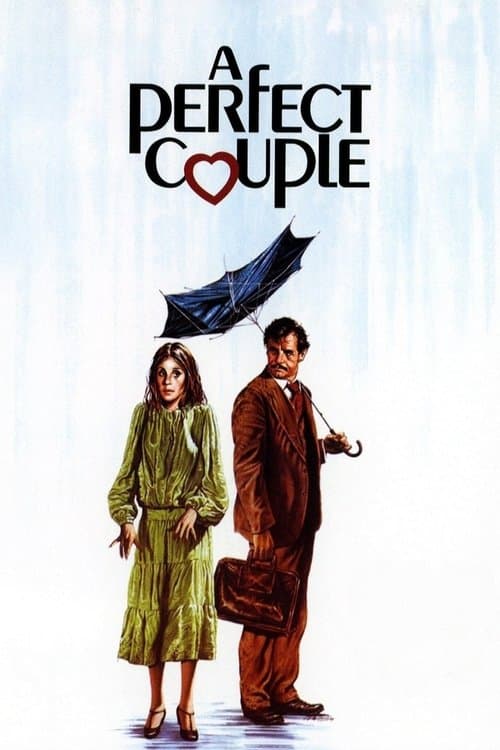
An uptight bachelor tries his luck with a computer dating service and gets matched up with his polar opposite.
7 min read
Release Year: 1979
Rating: 5/10
Runtime: 110 minutes
By Ellis Carver
A Perfect Couple (1979): Ending Explained
Quick Recap
In Robert Altman's A Perfect Couple (1979), we follow Anthony Hockemos (played by Paul Dooley), a straitlaced, middle-aged bachelor whose life feels as rigid as the classical music records he obsessively collects. Desperate for connection, he turns to a computer dating service, only to be paired with the free-spirited Sheila (Marta Heflin), a young woman whose world couldn't be further from his own. Sheila is immersed in a nomadic tribe of bohemian musicians, a ragtag collective that roams the country, chasing gigs in vast outdoor arenas under the open sky. Their performances pulse with raw, improvisational energy—guitars wailing against the wind, drums echoing like distant thunder—drawing crowds into a haze of communal ecstasy.
Anthony, drawn by the electric pull of romance and curiosity, abandons his buttoned-up existence to join Sheila and her band on the road. The film unfolds as a series of vignettes, blending awkward encounters with bursts of music that underscore the chasm between Anthony's structured isolation and the group's fluid, hedonistic chaos. Tensions simmer in the cramped tour bus, where the air hangs heavy with the scent of patchouli and sweat, and Anthony grapples with fitting into this alien rhythm. Through it all, Altman's camera lingers on the psychological friction, capturing the quiet dread of displacement amid the vibrant, unsettling freedom of the troupe's lifestyle.
What Happens in the Ending
The film's climax builds to a feverish outdoor concert in a sprawling, windswept arena, the kind of venue where the horizon blurs into the night sky, and the crowd's murmurs rise like a gathering storm. Anthony, now several weeks into the tour, has shed some of his formal attire for rumpled jeans and a borrowed band tee, but his posture remains stiff, his eyes darting with the unease of an outsider peering into a ritual. The band launches into their set, the music swelling with visceral intensity—bass lines thumping through the earth like a heartbeat, vocals slicing the humid air with raw emotion. Sheila, radiant under the stage lights, locks eyes with Anthony from the wings, her voice weaving through the songs as an invitation, a challenge.
As the performance peaks, Anthony steps onto the stage unbidden, clutching a microphone with trembling hands. The crowd's roar envelops him, a wall of sound that drowns his inhibitions, and he attempts to sing along, his voice cracking against the polished harmony of the group. The moment hangs in taut suspension, the lights casting long shadows that twist like doubts across his face. Sheila reaches for him mid-song, their fingers brushing in a fleeting, electric touch, but the connection falters as the band's rhythm surges forward without him. The set ends abruptly with a dissonant chord that reverberates into silence, leaving Anthony isolated center-stage, the applause fading into the cool night breeze. He stands there, sweat-slicked and breathless, as the troupe disperses into the darkness, Sheila glancing back with a mix of tenderness and finality. The screen fades on Anthony alone under the stars, the distant hum of the bus engine signaling the road's inexorable pull onward—without him.
The Meaning Behind the Ending
This denouement pulses with Altman's signature blend of irony and melancholy, symbolizing the elusive nature of compatibility in a world of stark opposites. The outdoor arena becomes a metaphor for exposure: vast, unforgiving, where Anthony's attempt to merge with the bohemian collective lays bare the fragility of his uptight facade. The music itself—wild, improvisational—mirrors the psychological tension of the narrative, its visceral crescendos representing the seductive chaos of Sheila's world, while Anthony's faltering voice underscores the discord of forced assimilation. Sensory echoes linger: the gritty texture of stage dust underfoot, the acrid tang of stage smoke, evoking a mood of intoxicating yet claustrophobic liberation.
At its core, the ending probes the theme of mismatched souls, suggesting that true connection isn't forged through adaptation but recognized in its impossibility. Anthony's isolation on stage isn't defeat but a quiet epiphany—the realization that some polarities repel rather than attract. The fading applause and encroaching night amplify this, turning the concert's high into a hollow echo, a visceral reminder that the road of self-discovery often leads back to solitude.
Character Arcs and Resolution
Anthony's journey arcs from suffocating conformity to a tentative embrace of the unknown, only to circle back to self-awareness in the final scenes. His initial rigidity—evident in the sterile glow of his dating service screen and the precise spins of his record player—cracks under the band's nomadic pulse, revealing a man starved for vitality. Yet, the ending resolves his arc not with triumphant integration but with poignant detachment; stepping onstage marks his boldest vulnerability, but the troupe's forward momentum leaves him adrift, forcing a reckoning with his core identity. It's a resolution laced with ambiguity—he's changed, softer around the edges, but fundamentally unaltered, the road's dust still clinging to his skin as a badge of what might have been.
Sheila, by contrast, embodies the unchanging flow of her bohemian life, her arc a steady orbit around communal freedom. Her glance back at Anthony carries no regret, only the subtle tension of lives brushing without merging. For her, the ending reaffirms the band's ethos: fluid, unpossessive bonds that thrive on motion, leaving Anthony's pursuit as a fleeting ripple in their endless tour.
Alternate Interpretations
The ending's ambiguity invites multiple lenses. One reading casts it as a bittersweet victory for Anthony: his stage moment, however awkward, liberates him from his bachelor stasis, the isolation a necessary solitude for growth rather than rejection. The distant bus hum could signal his choice to return home renewed, interpreting the fade-out as empowerment amid the night's enveloping quiet.
Alternatively, it might subvert romantic expectations entirely, viewing the concert as a ritual of exclusion. Sheila's world devours interlopers, and Anthony's expulsion reinforces a darker theme of class and age divides—his "perfect" match exposed as a cruel illusion by the computer's cold algorithm. Here, the sensory overload of the performance becomes oppressive, the applause a mocking chorus that heightens his psychological unraveling, leaving viewers to ponder if connection was ever possible or merely a mirage in the arena's haze.
Themes and Symbolism
The ending crystallizes A Perfect Couple's exploration of opposition and harmony, subverting the rom-com trope of inevitable union. Symbolism abounds in the natural elements: the open arena sky as boundless possibility clashing with Anthony's grounded hesitation, the wind-whipped stage evoking the tension between control and surrender. Music serves as the film's throbbing heart, its musical numbers not mere interludes but metaphors for emotional sync—or lack thereof—reinforcing themes of alienation in an increasingly disconnected society.
Altman also weaves in subtle critiques of 1970s counterculture, portraying the bohemian troupe's communal bliss as intoxicating yet insular, a velvet trap that ensnares the uninitiated. The ending subverts idealism, suggesting that such lifestyles, for all their visceral allure, demand total immersion; partial entry only amplifies the psychological rift, leaving scars as tangible as the night's chill.
Final Thoughts
Altman's ending in A Perfect Couple lingers like the aftertaste of a half-remembered melody—evocative, unresolved, and deeply human. It works masterfully by eschewing tidy closure for atmospheric immersion, drawing viewers into the uneasy space between longing and letting go. In a film alive with musical vitality and quiet dread, this finale doesn't just explain the characters' fates; it encapsulates the haunting truth that some couples are perfect only in theory, their collision a symphony of what-ifs echoing into the dark. For audiences craving depth over resolution, it's a resonant triumph, though its subtlety might frustrate those seeking overt catharsis. Ultimately, it invites reflection on our own mismatched pursuits, the road ahead as mysterious and unforgiving as the one Anthony watches recede.