Oh, Hi! (2025): Ending Explained
"When you find the one, lock them down."
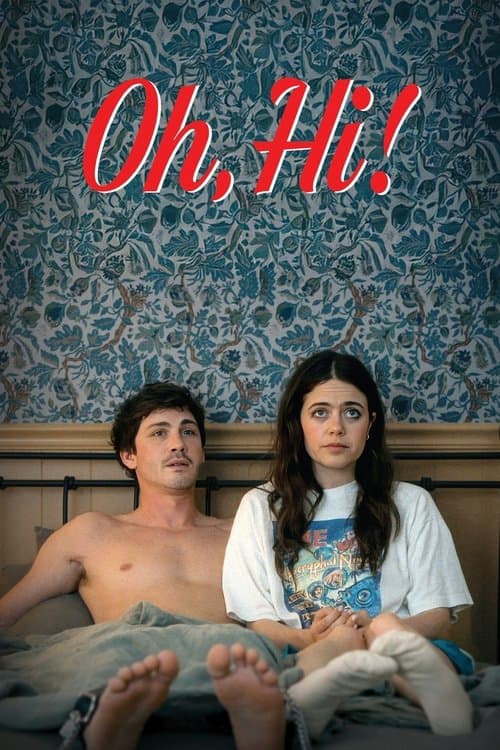
Iris and Isaac's first romantic weekend getaway as a couple goes awry. Convinced she's met her perfect guy and that he's just confused, Iris goes to increasingly ridiculous and irrational lengths to prove to Isaac that they are meant to be together.
9 min read
Release Year: 2025
Rating: 6.2/10
Runtime: 95 minutes
By Luna Sterling
Oh, Hi! (2025): Ending Explained
By Luna Sterling
In the shadowy undercurrents of Oh, Hi! (2025), director [redacted for spoiler-free] weaves a tale of deception, vengeance, and fractured illusions that pulses with a humid, inescapable tension. What begins as a seemingly straightforward romantic entanglement spirals into a visceral nightmare, where the air grows thick with unspoken betrayals and the metallic tang of impending doom. As a film critic who's dissected countless cinematic gut-punches, I find this ending not just shocking, but a haunting crescendo that lingers like the echo of a stifled scream. If you're here for the Oh, Hi! ending explained, buckle up—we're diving deep into the blood-soaked finale, unpacking its psychological layers, and exploring why it leaves you breathless in the dim afterglow of the screen.
Quick Recap
Oh, Hi! unfolds in a world drenched in the sticky heat of moral ambiguity, where love is a weapon and trust is a fatal illusion. The story centers on Bosu, a man driven by raw, familial loyalty after his sister is cruelly deceived and abandoned by her college sweetheart, Mohan, who dies—or so it seems—after leaving her with a child. Bosu, now guardian to the innocent boy, embarks on a relentless quest for vengeance, his every step shadowed by the weight of grief and the faint, milky scent of the child's vulnerability.
Meanwhile, Mohan—revealed to be very much alive and scheming—has slithered into a new life, charming Ooha, the daughter of a wealthy company owner, into a whirlwind romance. He manipulates her father into accepting their union and positioning him to inherit the business, all while concealing his existing marriage to his cousin Vani, whom he exploited for dowry and now seeks to erase. The narrative thickens as Bosu crosses paths with Ooha and Vani during a chaotic street confrontation, forging unlikely alliances amid the clamor of honking horns and the acrid smoke of urban unrest. Mohan's desperation mounts; he attempts to gas Vani in their home, the hiss of leaking pipes a sinister whisper of his unraveling psyche.
As wedding preparations loom, truths collide like thunder in a storm-swept night. Vani discovers Mohan's duplicity through a wedding invitation's glossy betrayal, leading to brutal confrontations where fists meet flesh in the dim confines of their home. Bosu, battered by Mohan's hired thugs, finds solace in Vani's care, her hands trembling as she tends his wounds with a quiet, unspoken solidarity. The stage is set for a cataclysmic unraveling, where the romantic facade crumbles under the relentless pressure of hidden sins, pulling everyone into a vortex of rage and revelation.
What Happens in the Ending
The finale of Oh, Hi! erupts in a frenzy of shadowed violence and fractured psyches, unfolding like a fever dream in the suffocating hush of night. As Mohan's wedding to Ooha proceeds amid garish celebrations, Bosu—haunted by the presumed death of the child and fueled by a burning, visceral hatred—confronts the groom but is forced to flee the throng of oblivious guests. Mohan, ever the opportunist, slips away post-ceremony to dispose of Vani's body, her lifeless form a grim secret weighing on him like chains in the moonless dark.
Bosu, seizing the moment, tracks down Ooha and lays bare Mohan's web of lies—the cheating, the murder, the child—in a tense exchange heavy with the scent of jasmine from her bridal garlands and the metallic edge of impending tears. Ooha, her world shattering like fragile glass, retreats into the bridal chamber, where the air hangs thick with incense and unspoken dread. She lures Mohan with a playful prank, offering him milk laced with feigned poison, her laughter a brittle mask over seething fury. As he embraces her in relief, the illusion shatters; Ooha plunges a knife into him, the blade sinking with a wet, muffled thud that echoes her psychological torment.
Mohan, blood bubbling from his lips in ragged gasps, staggers into the night, his vision blurring with pain and panic. He stumbles upon the child—alive, after all—whose cries pierce the silence like a siren's wail, stirring the last embers of his fractured conscience. Ooha arrives, cradling the boy, and in a ritualistic act of defiance, has him remove her mangala sutra, the sacred thread snapping with a symbolic finality that voids their union. The words hang in the air: "This marriage is over, undone by your own son." Enraged, Mohan lunges from the shadows, his hands clawing for vengeance, but Bosu intervenes in a brutal clash. With a guttural roar, Bosu drives his blade into Mohan, ending the tyrant's life in a spray of crimson that stains the earth. Yet victory is pyrrhic; Bosu collapses, his body succumbing to the accumulated wounds from earlier assaults, his final breaths a wheezing release amid the child's uncomprehending sobs. Ooha, her sari trailing like a ghost's shroud, walks away into the enveloping darkness, the child in her arms—a solitary figure against the vast, indifferent night.
The Meaning Behind the Ending
At its core, the ending of Oh, Hi! is a visceral exorcism of toxic masculinity and the illusions of love, rendered in strokes of blood and shadow that probe the psyche's darkest recesses. Mohan's death isn't mere retribution; it's a metaphor for the collapse of patriarchal deceit, his body crumpling as the lies that propped him up dissolve. The mangala sutra's removal, performed by the child, symbolizes the innocence corrupted by adult sins— a thread of tradition severed, reclaiming agency from a system that binds women like Ooha and Vani in chains of ignorance and abuse. The child's cries serve as a haunting auditory motif, underscoring themes of legacy and the cyclical nature of trauma; Mohan's fleeting paternal instinct in his final moments humanizes him just enough to twist the knife of irony, suggesting that even monsters glimpse their humanity in death's antechamber.
Psychologically, the finale immerses us in Ooha's transformation from naive bride to avenging force, her stab a cathartic release of suppressed rage, the knife's gleam reflecting the flickering candlelight of her awakening. Bosu's sacrifice amplifies the mood of inevitable decay—his quest, born of protective fury, ends in self-annihilation, mirroring how vengeance poisons the avenger from within, leaving a hollow echo in the quiet aftermath. Thematically, it's a meditation on revelation's double edge: truth liberates Ooha but orphans the child in a world still steeped in deception, the night's oppressive humidity a sensory shroud over unresolved grief.
Character Arcs and Resolution
Bosu's arc crescendos in tragic nobility, evolving from a grief-stricken brother to a spectral guardian whose lifeblood fuels justice. His death resolves his vengeance but underscores the hollowness of retribution; the child's survival becomes his legacy, a fragile light piercing his self-imposed darkness, yet it leaves him as a martyr whose psychological scars—etched in every labored breath—claim him utterly.
Ooha's journey is the film's emotional core, shifting from wide-eyed romantic to a woman forged in betrayal's fire. Her final act of walking away with the child signifies empowerment amid devastation; she's no longer the trapped ingenue but a maternal redeemer, her steps into the night evoking a tense, ambiguous freedom. The resolution for her is bittersweet—liberated from Mohan's grasp, yet burdened by the weight of violence and loss, her arc a psychological ascent through the fog of illusion.
Mohan, the serpentine antagonist, arcs toward his own undoing, his charm eroding into feral desperation. His death resolves the chaos he sowed, but not without a flicker of complexity—his attack on Ooha reveals the terror of a man unmasked, his end a fitting poetic justice that ties his manipulative threads into a noose of his making. Vani's off-screen demise haunts the resolution, her arc a silent cautionary tale of exploited loyalty, her absence a void that amplifies the survivors' isolation.
Alternate Interpretations
The ending's ambiguity invites multiple lenses, particularly in Ooha's departure. One reading casts it as redemptive triumph: she emerges as a phoenix from marital ashes, the child symbolizing hope's rebirth in a cycle broken by female agency. Yet, a darker interpretation sees it as a perpetuation of trauma—Ooha, stained by blood, walks into an uncertain future, the night's enveloping chill hinting at isolation or even future vengeance, questioning if justice heals or merely scars anew.
Bosu's intervention could be viewed as heroic closure or futile tragedy; perhaps his death implies a supernatural transfer of guardianship to Ooha, blurring life and legend in the film's atmospheric haze. Mohan's final glimpse of the child might suggest ghostly redemption—a psychological hallucination where he confronts his sins—or mere survival instinct, leaving viewers to ponder if the film subverts or reinforces the idea that evil dies unrepentant. These layers keep the tension alive, the screen's fade to black a lingering whisper of "what if?"
Themes and Symbolism
Oh, Hi! 's ending reinforces themes of deceptive romance and the fragility of societal facades, subverting the rom-com veneer suggested by its title into a thriller of shattered expectations. Symbolism abounds: the poisoned milk prank evokes tainted intimacy, a visceral nod to how love can curdle into lethality. The mangala sutra, gleaming gold against bloodied hands, represents cultural bondage undone, while the child's cries pierce the psychological veil, symbolizing innocence as both victim and catalyst for change.
Broader motifs of cyclical violence are subverted by Ooha's exit—rather than endless revenge, it hints at potential rupture, though the humid night air clings with doubt. The film's sensory palette— the slick warmth of blood, the distant hum of city life—amplifies isolation, reinforcing how personal betrayals echo in a indifferent world, turning love's "oh, hi" into a gasp of horror.
Final Thoughts
Oh, Hi! 's ending is a masterstroke of atmospheric dread, delivering a finale that doesn't just resolve but haunts, its psychological depth ensuring it resonates long after the credits roll. By blending visceral action with subtle emotional undercurrents, it crafts a resolution that's as unsettling as it is satisfying—working brilliantly to subvert expectations and leave audiences in a tense, reflective silence. If the film's earlier romantic sparks felt like a deceptive lure, this blood-drenched close proves its true genius: in exposing the rot beneath, it reminds us that some hellos end in irreversible goodbyes. A must-rewatch for its moody immersion—highly recommended for those craving endings that cut deep.