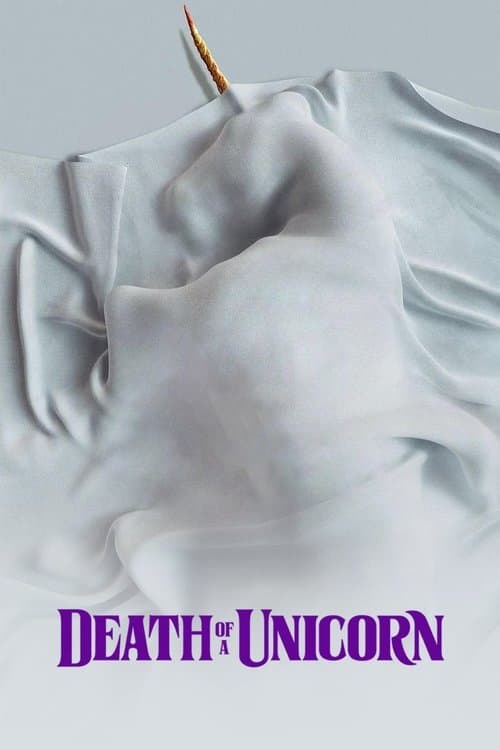
Death of a Unicorn (2025): Ending Explained
"Payback is a beast."
A father and daughter accidentally hit and kill a unicorn while en route to a weekend retreat, where his billionaire boss seeks to exploit the creature’s miraculous curative properties.
10 min read
Release Year: 2025
Rating: 6.425/10
Runtime: 107 minutes
By Luna Sterling
Death of a Unicorn (2025): Ending Explained
By Luna Sterling
In the shadowy wilderness of Death of a Unicorn (2025), directed by a visionary hand that blends folkloric wonder with visceral horror, the line between myth and monstrosity blurs into a blood-soaked haze. This tale of accidental discovery and ruthless exploitation pulses with an undercurrent of dread, where the air hangs heavy with the metallic tang of blood and the faint, ethereal glow of impossible healing. As a film critic drawn to the psychological fractures in genre storytelling, I find the film's climax a haunting meditation on innocence lost and nature's unforgiving retribution. If you're here for the Death of a Unicorn ending explained, buckle up—this finale rams through expectations like a mythical beast through fragile human barriers.
Quick Recap
Elliot Kintner, a beleaguered lawyer, and his teenage daughter Ridley embark on a tense drive through the mist-shrouded Canadian Rockies toward a weekend retreat at the sprawling estate of his billionaire boss, Odell Leopold. The Leopolds—Odell, his sharp-edged wife Belinda, and their entitled son Shepard—represent the pinnacle of unchecked privilege, their world a sterile bubble of excess. But the journey shatters when Elliot's car collides with a small, otherworldly creature: a unicorn foal, its iridescent horn piercing the night like a forbidden promise.
Hiding the injured beast in their vehicle, the Kintners arrive at the estate, where the unicorn's blood soon reveals its miraculous properties—erasing Ridley's acne in a warm, tingling rush and sharpening Elliot's vision amid the crisp mountain air. The Leopolds uncover the secret, and greed ignites. Scientists under Dr. Song's lead extract the horn's essence, curing Odell's cancer in a sterile lab lit by cold fluorescents. Ridley, haunted by cosmic visions sparked by the creature's touch—flashes of ancient tapestries and surrendered maidens—pleads for mercy, invoking the lore of The Unicorn Tapestries. But exploitation prevails; the foal is bound for a laboratory, its body a commodity in the Leopold empire.
Tensions erupt as an adult unicorn, massive and vengeful, slaughters guards in a frenzy of gore and thunderous hooves. A hunting party forms, drawing Elliot into the fray, while Shepard's reckless snorting of the horn unlocks his own twisted visions. Ridley realizes the foal is alive, its labored breaths echoing her growing horror. The adults' hubris unravels in ambushes and traps, leaving bodies strewn like broken idols in the fog-damp woods, as the unicorns—parents to the wounded young—close in with a primal, inexorable rage.
What Happens in the Ending
The finale unfolds in a claustrophobic storm of survival and supernatural intervention, the estate's opulent halls turning into a labyrinth of echoing screams and splintering wood. As the parent unicorns breach the grounds, their hooves thudding like distant thunder against the polished floors, one beast corners Belinda in a visceral tableau of terror. Her final moments are a gut-wrenching blur—claws raking through flesh, the wet rip of entrails spilling across marble, her gasps swallowed by the creature's low, rumbling growl. Shepard flees into the shadows, his high from the horn fueling a manic desperation.
Elliot, clutching the stolen horn like a jagged talisman, its surface warm and pulsing faintly under his grip, draws one unicorn away from the house. The air thickens with the scent of pine and blood as he lures it outside, buying Ridley precious seconds to slip toward safety. But Shepard ambushes her, bow drawn taut, an arrow's point hovering inches from her throat. His eyes, wild and dilated from the horn's visions, gleam with a feverish revelation: unicorns yield to a "pure-hearted maiden," a myth he's twisted into entitlement. He binds Ridley's wrists, his breath hot and ragged against her skin.
The parent unicorns arrive, their massive forms silhouetted against the moonlit windows, muscles rippling under hides that shimmer like liquid silver. Yet they halt, docile and still, their breaths syncing with Ridley's trembling calm—a moment of fragile, electric peace amid the carnage. Shepard, seizing the opportunity, moves to truss their legs with ropes that creak under the strain. Elliot bursts in, the horn a improvised blade in his fist; he drives it into Shepard's side with a sickening thud, blood blooming dark on the young man's shirt. In retaliation, Shepard looses an arrow that pierces Elliot's chest, the shaft quivering as he crumples, gasping wetly.
Shepard staggers, only to be felled by a unicorn's swift, bone-cracking kick, his body folding like discarded prey. As Elliot bleeds out on the cold floor, Ridley kneels beside him, her voice a whisper laced with sorrow, recounting her visions—of cosmic tapestries weaving fate, surrender, and rebirth. The unicorns, sensing her grief, approach with an almost tender menace. In a surge of ethereal light that casts long, wavering shadows, they channel their magic: the foal stirs back to life in the distant lab, its wounds knitting with a soft, humming glow, and Elliot's body arches, the arrow vanishing as vitality floods his veins. The creatures nuzzle Ridley briefly, their warmth a fleeting comfort, before vanishing into the encircling woods, the night swallowing their forms.
Dawn breaks with Griff, the estate's aide, returning alongside police cruisers, sirens cutting through the misty silence. The scene is a slaughterhouse tableau—bodies mangled, blood congealing in sticky pools. The officers, faces paling at the Kintners' gore-streaked clothes, cuff them roughly, mistaking them for culprits or crazed witnesses. A female officer radios her chief: "Bringing in survivors. You won't believe the story." Handcuffed in the back of the patrol car, Elliot and Ridley buckle up, exchanging a tense glance as the vehicle pulls onto the lakeside road, tires crunching gravel.
Then, the unicorns reemerge from the treeline, their eyes reflecting the rising sun like twin flames. Griff, spotting them, waves the car to a halt, his face a mask of awe and fear, allowing them passage. The beasts charge, horns lowered in a blur of motion and fury. The Kintners brace—Elliot's hand gripping Ridley's—as the unicorns ram the cruiser with earth-shaking force. Metal screams, glass shatters in a crystalline spray, and the car plummets off the embankment into the lake's icy embrace, water surging in with a choking roar.
The credits roll over an imagined restoration of The Unicorn Surrenders to a Maiden tapestry: threads depicting the Rockies' jagged peaks, a hidden cave pulsing with myth, echoes of the film's deaths in stylized agony, and a climactic scene—a unicorn toppling a carriage into churning waters, two figures emerging, sodden and alive, to swim toward an uncertain shore.
The Meaning Behind the Ending
This ending is a thunderclap of poetic justice, where the unicorns' rampage transcends mere revenge, symbolizing nature's raw, unyielding reclamation against human avarice. The creatures, ethereal yet brutally corporeal, embody purity corrupted by touch—their blood a double-edged elixir that heals the innocent (Ridley's skin, Elliot's ailments) but poisons the greedy (Odell's fleeting cure, Shepard's hallucinatory hubris). The final ram into the lake isn't annihilation but a baptismal plunge, mirroring the tapestry's imagery of surrender and survival. Psychologically, it probes the tension between exploitation and empathy: the unicorns' docility toward Ridley underscores her untainted heart, a visceral contrast to the Leopolds' cold calculations, suggesting that true magic demands vulnerability, not commodification.
The revival of Elliot and the foal pulses with themes of redemption through loss—the warm resurgence of life after death's chill grip evokes a cycle where grief invites miracle, leaving a lingering unease in the air. It's as if the film's atmosphere, thick with the damp rot of the woods and the sterile bite of labs, culminates in water's murky depths, washing away sins while hinting at deeper, unspoken costs. The ending asserts that myths aren't benign; they're forces that demand balance, ramming through illusions of control with horns sharp as regret.
Character Arcs and Resolution
Elliot's journey arcs from reluctant enabler—bludgeoning the foal in a panic of blood-splattered headlights—to sacrificial guardian, his theft of the horn a desperate bid for agency in a world of billionaire whims. His deathbed visions shared with Ridley forge an intimate bond, resolving his arc in revival: no longer the allergic, vision-blurred everyman, he's reborn tougher, his improved senses a metaphor for clearer moral sight. Yet the arrest and plunge leave him suspended in ambiguity—alive, but pursued by consequences.
Ridley's evolution from acne-scarred teen to visionary maiden is the film's emotional core. Her cosmic flashes, triggered by the horn's touch, build her intuition, culminating in her calming the unicorns amid the estate's blood-slick chaos. Mourning Elliot cements her purity, earning the creatures' grace; her survival in the lake's grip resolves her arc as the tapestry's maiden—surrendered yet empowered, emerging from turmoil with a hard-won wisdom that lingers like the faint, healing scent of unicorn blood.
The Leopolds' arcs shatter in hubris: Odell's hunt ends in ambush, his cured body fodder for fangs; Belinda's disembowelment strips her poise to primal fear; Shepard's drug-fueled entitlement collapses in a fatal kick, his "maiden" knowledge perverted into control. Their deaths resolve nothing—mere punctuation to the Kintners' fraught redemption—highlighting how privilege invites retribution, leaving echoes of their screams in the psychological wreckage.
Alternate Interpretations
The ending's tapestry coda invites multiplicity: is the plunge into the lake literal survival, as the woven image suggests two figures swimming free, or a metaphorical descent into oblivion? One reading casts the unicorns as vengeful deities sparing the pure but dooming the tainted— the Kintners' arrest a false dawn, their "story" dismissed as madness, implying institutional erasure of the miraculous. Alternatively, it could symbolize cyclical myth-making: the events loop back into folklore, the Kintners as modern tapestry figures, alive but forever altered, their escape a psychological rebirth rather than physical. The unicorns' return might even hint at ongoing protection, Griff's allowance a nod to human allies in the myth, subverting total isolation. These layers keep the tension taut, the water's chill a veil over unresolved fates.
Themes and Symbolism
The ending reinforces core themes of exploitation versus harmony, subverting unicorn lore from chaste fantasy to feral reckoning. The creatures symbolize untamed nature—docile to innocence, lethal to greed—their horns phallic daggers of purity turned weapon, grating against labs' mechanical whir. Blood and water motifs weave through: healing vitae contrasts the lake's drowning purge, a baptism subverting Christian undertones in the tapestries. Psychologically, visions represent fractured psyches—Ridley's enlightenment versus Shepard's delusion—while the estate-to-wilderness shift evokes encroaching wilderness on civilized facades. Ultimately, it subverts capitalist triumph, the unicorns' ram a visceral critique of monetizing the sacred, leaving a mood of uneasy wonder in the fog-shrouded aftermath.
Final Thoughts
Death of a Unicorn's ending works its magic through sheer immersive force—a blend of gore-drenched horror and mythical awe that lingers like the aftertaste of blood and lake water. It doesn't tie every thread but revels in the unraveling, rewarding viewers with a finale that feels earned, psychologically resonant, and thematically sharp. For those dissecting this 2025 gem, it's a reminder that some wonders demand we surrender control, lest they charge back with horns bared. If the film's blend of tension and tenderness hooked you, this close proves why: in the end, survival swims in the murky depths of what we dare to believe.